Somewhere out there, a city council meeting is happening. And you're not watching it. But I am. Each week, I bring you the highlights, lowlights, and weirdlights from places you don't live.
This Christmas, we are celebrating the third year in a row that City Council Chronicles (and our other project, Tear It Down) has made the ELGL Top 100 Local Government Influencers list! We are very thankful for the award, and you can read more about the other 99 honorees on ELGL.org.
Simultaneously, you can listen to our holiday-themed podcast episode on iTunes, Stitcher, Player FM, and right here:
On this episode, you will hear excerpts from these full interviews:
As always, the podcast’s sponsor is Dig Deep Research. They assist local governments in obtaining grant money and are eager to hear from potential new clients. Find out how they can help you today:
Christina Romelus is a first-term commissioner and current vice mayor who has experienced pirates in the commission chamber, commentaries on dog poop, and a vote to appoint a new commissioner. But one of the most difficult moments came in response to an idea she raised last year.
—
Q: On December 5, 2017, you proposed a sanctuary city policy, which basically said that local police will not be enforcing federal immigration law. We have covered sanctuary city debates in other councils. But in the case of Boynton Beach, you all easily had the most boisterous and most raucous public comment of anyplace I’ve seen. How did that make you feel?
A: It reminded me that the First Amendment is alive and well [chuckles]. One of the things that we as America pride ourselves on is being the land of the free and the home of the brave. We provide opportunities. People who come here trying to escape tyranny, they sometimes find worse treatment than they had back home. I’ve never robbed anybody. I’ve never beat up, murdered, stolen anything. Yet when people find out I’m an immigrant or hear the term “immigrant,” that’s what their mind gravitates to.
Q: Mmhmm.
A: The proposal that I was trying to have that night when it turned into a sanctuary city discussion–which is what I never intended for it to be–it was a fruition of the decree that President Trump was cancelling temporary protected status for individuals from countries like Haiti, Honduras, Venezuela, I believe. Those points of view never even got out of my mouth. The second “sanctuary cities” was blared out, it just became an all-out attack on me.
Q: We heard one man say you should be impeached or removed. That is new for me in a sanctuary city debate. What struck me was how personal it got in Boynton Beach. Why do you think that was the direction it took?
A: Half of the people in that room were not Boynton Beach residents. It literally almost became like a Trump rally in chambers. The entire chambers was filled with people with signs–“build the wall!”
Boynton Beach, FL Vice Mayor Christina Romelus
Q: How surprised were you that all of your other commissioners and the mayor rejected your proposal on grounds of “law and order?”
A: Having you replay this is all raw for me all over again. That night was not an easy night for me. I believe in the Constitution. I took an oath as well to protect and defend the Constitution. And I do that. But we have a duty to protect those who can’t protect themselves. When a black person was considered three-fifths of a person, that was in the Constitution. Was it right to uphold that then? That’s political speak, I feel, for cowering away from the conversation. It was the most politically-savvy way to look like “I’m obligated, my hands are tied,” not necessarily because it’s the right thing to do.
Q: There was a recess after this topic and the commission meeting continued. I noticed you were not there for the remainder of the meeting. Why was that?
A: I could not remain in a room filled with that much hate aimed at me. I could not sit on a dais with people who did not even take the time to consider the reasons or to hear out the arguments why I brought up the conversation. I was not in the right state to continue with that meeting. I actually had somebody escort me home from our police department because that’s how unsafe I felt.
Follow Vice Mayor Christina Romelus on Twitter: @romelus_c
Alexa Loo is a former Olympic athlete and current city councillor who has witnessed a pull-and-tug over the maximum size of houses on Richmond farmland. She explains what the root of the issue appears to have been for some people.
—
Q: I must congratulate you on being newly inaugurated to a second council term. Whose idea was it for the men and the women to take separate oaths of office?
A: What ended up happening is the men ended up sitting on the one side of the room and the women sat on the other side. It just worked out that way. On the women’s side, we even sit in alphabetical order. And that wasn’t planned either.
Q: So is this going to be like a seventh grade dance with the boys on one side and the girls on the other for the next four years?
A: Yes! It is what it is.
Q: On your island, you have something called the agricultural land reserve. About 39 percent of Richmond is farmland. Why were some councillors concerned about how long that would last?
A: There had never been a cap or a limit on the size of house that you could have on agricultural land. House sizes started to get bigger. There were starting to become applications for things as big as 40,000 square feet. You can put a skating rink in 40,000 square feet.
Q: In a meeting, your council decided to put a cap on the size of a house on farmland to around 11,000 square feet. I don’t know a lot about farming, but I’m assuming that with my bedroom, my children’s bedroom, my tractor’s bedroom, my wheat thresher’s bedroom, and the bedroom for my livestock–even with bunk beds I’d be pushing it with 11,000 square feet.
A: Well, a wheat thresher is so big, you can’t even drive it on a standard road, so–
Q: I would need a really big bedroom is what you’re saying?
Richmond, BC Councillor Alexa Loo
A: You would. There’s a whole bunch of rules that still protect the farmland, so at some point, does it matter if they have a three-car garage or a four-car garage? Does it matter if you have six bedrooms or five bedrooms? Why is it anybody else’s business what they’re doing?
Q: The fact is some people were unhappy with the limit. They thought 11,000 square feet were way too many–
A: And there’s a lot of people that don’t want a proliferation of South Asian people living on farmland.
Q: Their outrage was specifically aimed at limiting a racial or ethnic group from building these houses?
A: Typically those are the people building it. It’s easy to go after the size and shape of things if you know it’s gonna stick it to that group, I think.
Q: You referred in council meetings to the “good old boys” and fairness. Why in the meeting did you couch your language like that?
A: Because standing up at a council meeting and calling other people racist is a bold and dangerous move. Throwing names around like that–we’re not allowed to call people names.
Q: Were there any other councillors who felt the way you did about the racial aspect?
A: Oh, everybody’s well aware of it. The 23,000 square foot house that had been built, it had been built by a Caucasian person in Richmond. And he had a bowling alley in it. So when people are like, “what do you need a big house for?” He needs a bowling alley, apparently. But nobody seemed to have a big problem with it. They were more in awe at the time. But now if somebody else builds one, there’s a problem around it.
Joe Mihevc was a councillor for over 20 years when Ontario’s premier suddenly announced in the middle of this year’s election that he was cutting the size of Toronto’s city council from 47 wards to 25. This prompted several chaotic council meetings and even more chaotic provincial legislative sessions.
—
Q: Where were you on the night of July 26, 2018?
A: All councillors were in council session. That’s when we heard rumor on the second floor during the council meeting that something big was happening. We very quickly understood that the premier was going to be making an announcement the very next day that he was going to reduce our council.
Q: You said the word “premier.” For our American listeners, you’ll have to explain what that is. I’m assuming the premier is some sort of demigod? An authoritative mystic with the magic of Dumbledore and the charisma of Barack Obama?
A: Well, the equivalent to premier is “governor.” Here if you win the premiership, you also run the political party that has charge of the legislature. So it’s a pretty neat gig if you can get it.
Q: Councillor Paula Fletcher used the term “Trump tactics” to describe Premier Doug Ford’s council cuts. Do you agree with her description?
A: Absolutely. When we use those words in Canada, in this context it meant that the premier was acting in an authoritarian way. He was not consulting the folks that were impacted. It basically came from his head and he felt he needed to act, which is our perception of how things flow these days at the presidential level.
Q: During the July 27 meeting, you took a dinner break. And after councillors came back, the tone was completely different and more confrontational. What changed during that break?
A: As the day went on it became clear that the threat was real. I would suggest that what Doug–a part of him wanted us to fight it out. He actually provoked a “Hunger Games” at the city. Forty-four councillors recognized that if we did go to 25, there would be a fight for many a seat. Every councillor positioned himself to be active on the issue partly to show the community how strong they were going to be opposing Doug Ford.
Toronto, ON former Councillor Joe Mihevc
Q: Help me understand the types of councillors who were in favor of the province’s action. You mentioned there were Doug Ford’s allies, but were there also people who really could not stand the way your council operates?
A: I think the people who were supportive of Doug Ford’s actions–all of them were on the right-wing side of council.
Q: What do you make of the notion that as a councillor, you don’t have to have 12-hour days and do everything for everyone. With fewer councillors, your focus should be on taking votes in meetings, legislating, and not micromanaging everything that goes on in your neighborhoods?
A: That’s a very good point. It depends on your philosophy. If you want to put it on a spectrum, you can say on one side you are the board members of this $12 billion corporation called the city of Toronto and you are there to make decisions. That’s your job and that’s it. Others feel–and I would be one of them–that you have face time with residents. To double the size [of wards] means to get half the amount of face time.
Q: You knew Doug Ford when he was a city councillor. I take it he was a stickler for efficiency, effective governance, and moral rectitude?
A: [chuckles] Doug Ford was a stickler for trying to grab the limelight and score political points on how he hated all government. The word “dysfunction” that Doug Ford labeled city council–it was dysfunctional for many years when he and his brother [Rob Ford] were here. He was willing to go up into the audience. There was once when he was taunting them to come down and take him on. I remember those times as really tumultuous. Once they left, guess what? A new calm. I would suggest right now that provincial parliament is highly dysfunctional, and he’s at the center of that dysfunction.
Follow former Councillor Joe Mihevc on Twitter: @joemihevc
John D’Amico is in his seventh year on the WeHo council and he is not afraid of wading into controversies. From Donald Trump’s Hollywood star to bad behavior by council members, he discusses the importance of speaking up when necessary.
—
Q: When did the idea enter your mind that Donald Trump should no longer have a star on the Hollywood Walk of Fame and that you should do something about it?
A: When that star was vandalized again, it occurred to me that we were spending our time thinking about it and more importantly, the city of Los Angeles was spending tax dollars to replace it. And I was just thinking, why are we doing that? Why are we not speaking out? Why am I not speaking out? What very quickly occurred to me next was, why does this person–this sexist, quasi-fascist actor–have a star on the Walk of Fame?
Q: Yeah.
A: I received hundreds and hundreds and hundreds of emails. I responded to every single one with an email back that had my phone number at the bottom. Only two people called me. They were truly amazing people living in the middle of the country. We agreed that we were not gonna see this in the same way.
Q: On August 6, you introduced an actual resolution asking the Los Angeles city council and the chamber of commerce to remove the Trump star. As you might imagine, there were some strong opinions. One man even called you a “bad strategist” for not waiting until after the primary elections to send the letter. How worried were you that your actions may have affected the Wyoming governor’s race or the Alaska state senate primaries?
A: Well, not at all. I’m fairly certain that what we did here in West Hollywood had zero effect on elections across the country. That effect was generated by this president. He earned this “blue wave.”
Q: I can see that commenter’s point, though. This president loves to take legitimate criticism of him and convert it into fuel for immigrant bashers and media haters and mail bombers. Did you consider what might have happened if he had tweeted about you and what that might have meant for your safety or your city’s image?
A: Here’s what I thought: I’m not gonna live in an America where the president targets people. We can’t live in a country where you can say, “well, if the president tweets at you, you might be harmed.” That is not okay!
West Hollywood, CA Mayor Pro Tem John D’Amico
Q: You do have a reputation for bringing matters out into the open. I’m thinking especially of the meeting of March 7, 2016, when you called out Councilmember John Duran for his inappropriate behavior in council meetings. What prompted you to go public with that information?
A: I’m not always the most eloquent speaker. I don’t always get it right. But I will say that I do think that silence is often tantamount to complicity. I will say that Mayor Duran and I have very much repaired our relationship. He has changed dramatically as a council member and now mayor of our city. But my side of that was that I wanted our residents to know that I am paying attention and I am not afraid of speaking my truth on their behalf.
Q: Do council members need to be trained to recognize when something is out of whack? If they see something, to bring it up right away and not let it loose in a council meeting two years after the fact?
A: Sure, I guess that would make sense. But council members have bosses. That’s the public. We do not report to each other.
Q: Well, the constituents rely on someone to sound the alarm, though. Would you not agree?
A: Fair enough. Absolutely.
Follow Mayor Pro Tem John D’Amico on Twitter: @ourWEHO
The Minneapolis council has been proactive about addressing racial inequity, despite outside events making it a challenge. Andrea Jenkins describes how she felt about council members’ reactions to an equity training earlier this year.
—
Q: On August 1 of this year, there was a committee of the whole meeting in which you all sat through a racial equity training. Would you be surprised if I told you that I’ve been hosting this program for two years and this is the first racial equity training I’ve seen a city council do?
A: Yes, I thought every city council in America was doing racial equity training. That’s not true?
Q: No! I hate to let you down because that is wildly off-base, but what did you hope to accomplish with this training?
A: Well, we’re trying to get the council members woke. The main thing we wanted to accomplish was to have a common understanding and common language that everybody can start with. It dispels the opportunities for people to come in with their own perspective. If we can lay the groundwork for one common understanding, that was the purpose.
Q: I’m glad you brought that up because that was actually the part of the training that hit a roadblock. Council President Lisa Bender said she was uncomfortable participating in an exercise in which council members’ discussions about their early experiences with race would be televised. What did you make of that?
A: Boy, I was really–I was disappointed. We ask people to support us in being representatives. And then we are not willing to share details about our own experiences, our own lives, that could help bring understanding to why we make some of the decisions we make. I know that council President Bender is very open about some really vulnerable parts of her life. It would be really eye opening and compelling for people to understand some of her experiences around race. It wasn’t just council President Bender–I mean, if you watched the meeting, there were a number of council members who were reluctant to share that information. Sometimes there’s really powerful strength in being vulnerable.
Minneapolis, MN Council Vice President Andrea Jenkins
Q: There is another event we need to discuss that happened before the racial equity training. Can you explain what precipitated your June 27 committee of the whole meeting?
A: A week prior to that meeting, there had been a police-involved shooting of a young, black man who–it was under dispute whether or not he was armed, whether or not he was fleeing and was shot in the back. And so tensions in our community was really, really, really high.
Q: In that meeting, Council Member Cam Gordon wondered whether the city council needed more of a role in the police department. He proceeded to draft that exact charter amendment–which did not sit well with a number of people, including the public safety committee chair, Alondra Cano, who said she was “disgusted by the privilege” of the motion. What did you make of that?
A: I interpreted her use of the term “privilege” to suggest that it would’ve potentially been more appropriate for her to have made that–or someone who had those kinds of experiences–as opposed to Mr. Gordon, who has not lived those kinds of experiences.
Q: So speaking with terms of racial equity, it’s easier for someone who has benefited from the system to look at it and say, “something’s wrong. We need to fix it,” and to have people listen to him, than it might be for someone who belongs to a historically-oppressed group to say the same thing and perhaps get ignored when they say it.
A: I think that is absolutely true. Yes, I agree with that.
Follow Council Vice President Andrea Jenkins on Twitter: @annapoetic
This past Tuesday was Election Day in the United States, which means there were plenty of city council races to keep track of. We provide you with some updates on a handful of city councils profiled on previous podcast episodes.
As always, the podcast’s sponsor is Dig Deep Research. They assist local governments in obtaining grant money and are eager to hear from potential new clients. Find out how they can help you today:
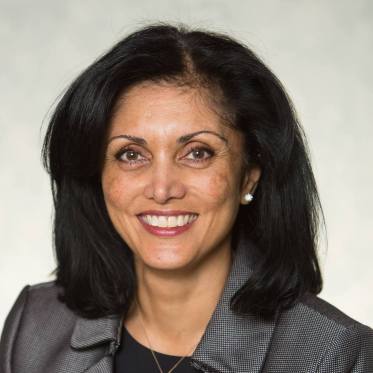
Jyoti Gondek is a first-term councillor in Calgary, where the discussion has recently turned to council transparency. She explains how it is sometimes necessary to go into closed-door meetings, and responds to the accusation that bullying is occurring therein.
—
Q: What is your position on city councillors’ attendance?
A: We had one of our fellow councillors raise the point that we should be better documenting when council members are present for a vote or for a meeting. I don’t disagree that it is important that your elected official is weighing in on your behalf. But the way that it was being proposed–through a roll call–to me was a bit ridiculous. There was an article written in a local newspaper about it and it called me out for being terribly nasty and not in favor of transparency. So I took a lighthearted approach and wrote a little something myself about what an “awful person” I was for not wanting transparency! It was a bit of a parody, but it was asking people to think about: do you just want a roll call? Or do you really want to know what kind of job your elected official is doing?
Q: I’m between your position and the more transparent position on attendance. Say you are able to keep track of councillors who wander out of a meeting, who are not there for votes, and who are strategic about when they are in their chairs. What am I supposed to do with that information? I’m not saying, “who cares about attendance?” But if I did care, is this a problem that’s actually affecting things?
A: Attendance has been exceptionally high. We have not seen council members who are trying to use the system and leave for a contentious vote. I don’t think the system is being gamed.
Q: Your council has had some drama about what happens behind closed doors generally. On April 3, Councillor Jeromy Farkas tweeted out:
While sometimes they are warranted, these secret meetings have also been abused and misused to instill fear, intimidate, and shut down new ideas. I am very pleased that Councillor @peterdemong is helping to tackle this issue. #yyccc 2/
Of the charges in that tweet, what percentage are true? What percentage are false? And what percentage are maybe just misinterpretations of people’s intentions?
A: I think it was an interesting thing to post on Twitter rather than bringing it up in a council meeting or to the integrity commissioner or to the mayor. Intimidation is a very big reach. I’ve never felt that way. This idea of secret meetings–or the “chamber of secrets” as it’s been dubbed by Councillor Farkas–perhaps he is learning the ropes. Sometimes a council has to take things offline because there’s confidential information.
Calgary, AB Councillor Jyoti Gondek
Q: On April 5, there was a motion to study the amount of time Calgary spends on closed session meetings. But all of a sudden, Councillor Jeff Davison stood up and expressed his displeasure at those tweets, then apologized for any offense he may have caused. When that happened, did you think, “oh, good! This will clear everything up!”
A: [laughs] No, I did not. Before we go in [to the closed meetings], it’s clearly identified what we are going to talk about. This idea of saying we’re going in camera [closed session] to insult a colleague or intimidate them, it’s not a fact. Now you’ve got a council that’s second guessing, “did we ever say anything that may have been construed in a manner other than what we intended?” If this is a big gang of bullies ganging up on one person, I think you would’ve seen more people actively doing something a lot less public, but we’re not. I think we were caught by surprise. I never expected him to say something about intimidating and bullying because I haven’t observed it.
Follow Councillor Jyoti Gondek on Twitter: @JyotiGondek
Even though Thornton gets rid of its council meeting videos (boo), there was still a lot of ground to cover with two-term Mayor Heidi Williams. She discussed difficult public hearings, titular protocol, and her frequent public commenters.
—
Q: Your Honor, the city of Thornton video streams its council meetings–which is good! And they are even in high definition with remarkable sound quality. So that is even better. The problem is: you only have videos posted for the last year. And I was told that Thornton takes down and destroys videos older than one year! Now look, we all made questionable fashion choices in the mid 2010s. Short shorts. Mom jeans. White people dreadlocks. So if that’s what this is about, I’m empathetic. But Mayor, when it comes to those videos, how do you defend what I am calling the Great Thornton Purge?
A: Well, I have to be honest: this is the first time I’ve heard of that. I did not realize that we took those videos down and destroyed them. So I will be getting to the bottom of that. I really thought that you could go back and watch videos a long time back.
Q: I am glad you are on the case. I take it from your answer that you don’t often watch videos of the council meetings after they happen. Is that accurate?
A: Oftentimes, I don’t want to actually relive it. The times that I’ve gone back and watched a portion of a meeting is because I thought maybe I said something really stupid. And generally I find that I either did or it wasn’t as bad as I thought. I think it’s a little narcissistic–again, I’m already there. But having said that, I understand how a lot of people aren’t there. And constituents are like, “oh, we watch you on channel 8 or we watch you online!” And I’m like, “you do?!” It’s always surprising to me that people do.
Q: Well, it’s all the more frustrating to me that I can only watch 52 weeks’ worth of meetings! I noticed that you don’t often miss meetings, which is admirable. But whenever you are gone and the mayor pro tem is in charge, everyone calls the mayor pro tem “Your Honor.” That title is reserved for you! Have you ever told your mayors pro tem to get back in their place–or do you want me to do that for you right now?
Thornton, CO Mayor Heidi Williams
A: In Thornton, all the elected officials are considered “The Honorable.” So actually, everybody that serves on council with me is “Your Honor.” I only missed two meetings the first six years. But the city manager called the mayor pro tem at the time “mayor” and somebody texted me right away. Apparently, that’s what they used to do. They don’t do that anymore, but they will say “Your Honor.”
Q: On March 20, there was an extended stay hotel proposed in Thornton. This council meeting was to approve it or reject it. Hearing people in the public hearing talk about “this type” of hotel and how “no college educated” people would stay there, and talking about how transient families would send their kids to school and “use our resources,” I felt uncomfortable with how people were resorting to elitist arguments when they really didn’t have to. Did that cross your mind at the time?
A: Sure, it’s always tough when a developer wants to put something in that people don’t want–the NIMBY effect. I’ve heard probably worse than that. That was a difficult hearing.
Q: You also had crowded meetings about marijuana stores, and I’m sure people were making arguments about destroying the city or letting in the “wrong type” of people or threatening children. Does it concern you when people make it seem that with one vote, your council will do all of those things to the city?
A: Yeah, and the longer I’m the mayor, I’ve just seen so much of that. That would probably be one of my most frustrating things. Everybody’s like, “not in my backyard.” As a society, we have to start being more thoughtful and less hateful. And try to talk to our council members about what we want and don’t want, but in a way that’s not demeaning or hateful. I’ve just seen in the last couple of years a lot more hateful stuff being said. Not tons, but a lot more than I did.
Follow Mayor Heidi Williams on Twitter: @mayorheidi






 City Council Chronicles