Interview #113: West Hollywood, CA Mayor Pro Tem John D’Amico (with podcast)

This podcast interview is available on iTunesStitcherPlayer FM, and right here:

John D’Amico is in his seventh year on the WeHo council and he is not afraid of wading into controversies. From Donald Trump’s Hollywood star to bad behavior by council members, he discusses the importance of speaking up when necessary.

Q: When did the idea enter your mind that Donald Trump should no longer have a star on the Hollywood Walk of Fame and that you should do something about it?

A: When that star was vandalized again, it occurred to me that we were spending our time thinking about it and more importantly, the city of Los Angeles was spending tax dollars to replace it. And I was just thinking, why are we doing that? Why are we not speaking out? Why am I not speaking out? What very quickly occurred to me next was, why does this person–this sexist, quasi-fascist actor–have a star on the Walk of Fame?

Q: Yeah.

A: I received hundreds and hundreds and hundreds of emails. I responded to every single one with an email back that had my phone number at the bottom. Only two people called me. They were truly amazing people living in the middle of the country. We agreed that we were not gonna see this in the same way.

Q: On August 6, you introduced an actual resolution asking the Los Angeles city council and the chamber of commerce to remove the Trump star. As you might imagine, there were some strong opinions. One man even called you a “bad strategist” for not waiting until after the primary elections to send the letter. How worried were you that your actions may have affected the Wyoming governor’s race or the Alaska state senate primaries?

A: Well, not at all. I’m fairly certain that what we did here in West Hollywood had zero effect on elections across the country. That effect was generated by this president. He earned this “blue wave.”

Q: I can see that commenter’s point, though. This president loves to take legitimate criticism of him and convert it into fuel for immigrant bashers and media haters and mail bombers. Did you consider what might have happened if he had tweeted about you and what that might have meant for your safety or your city’s image?

A: Here’s what I thought: I’m not gonna live in an America where the president targets people. We can’t live in a country where you can say, “well, if the president tweets at you, you might be harmed.” That is not okay!

193570_119607551448362_7705342_o
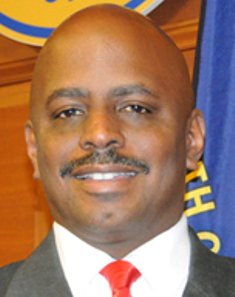
West Hollywood, CA Mayor Pro Tem John D’Amico

Q: You do have a reputation for bringing matters out into the open. I’m thinking especially of the meeting of March 7, 2016, when you called out Councilmember John Duran for his inappropriate behavior in council meetings. What prompted you to go public with that information?

A: I’m not always the most eloquent speaker. I don’t always get it right. But I will say that I do think that silence is often tantamount to complicity. I will say that Mayor Duran and I have very much repaired our relationship. He has changed dramatically as a council member and now mayor of our city. But my side of that was that I wanted our residents to know that I am paying attention and I am not afraid of speaking my truth on their behalf.

Q: Do council members need to be trained to recognize when something is out of whack? If they see something, to bring it up right away and not let it loose in a council meeting two years after the fact?

A: Sure, I guess that would make sense. But council members have bosses. That’s the public. We do not report to each other.

Q: Well, the constituents rely on someone to sound the alarm, though. Would you not agree?

A: Fair enough. Absolutely.


Follow Mayor Pro Tem John D’Amico on Twitter: @ourWEHO

Interview #112: Minneapolis, MN Council Vice President Andrea Jenkins (with podcast)

This podcast interview is available on iTunesStitcherPlayer FM, and right here:

The Minneapolis council has been proactive about addressing racial inequity, despite outside events making it a challenge. Andrea Jenkins describes how she felt about council members’ reactions to an equity training earlier this year.

Q: On August 1 of this year, there was a committee of the whole meeting in which you all sat through a racial equity training. Would you be surprised if I told you that I’ve been hosting this program for two years and this is the first racial equity training I’ve seen a city council do?

A: Yes, I thought every city council in America was doing racial equity training. That’s not true?

Q: No! I hate to let you down because that is wildly off-base, but what did you hope to accomplish with this training?

A: Well, we’re trying to get the council members woke. The main thing we wanted to accomplish was to have a common understanding and common language that everybody can start with. It dispels the opportunities for people to come in with their own perspective. If we can lay the groundwork for one common understanding, that was the purpose.

Q: I’m glad you brought that up because that was actually the part of the training that hit a roadblock. Council President Lisa Bender said she was uncomfortable participating in an exercise in which council members’ discussions about their early experiences with race would be televised. What did you make of that?

A: Boy, I was really–I was disappointed. We ask people to support us in being representatives. And then we are not willing to share details about our own experiences, our own lives, that could help bring understanding to why we make some of the decisions we make. I know that council President Bender is very open about some really vulnerable parts of her life. It would be really eye opening and compelling for people to understand some of her experiences around race. It wasn’t just council President Bender–I mean, if you watched the meeting, there were a number of council members who were reluctant to share that information. Sometimes there’s really powerful strength in being vulnerable.

DoDPlYzU8AEfI9i.jpg-large
Minneapolis, MN Council Vice President Andrea Jenkins

Q: There is another event we need to discuss that happened before the racial equity training. Can you explain what precipitated your June 27 committee of the whole meeting?

A: A week prior to that meeting, there had been a police-involved shooting of a young, black man who–it was under dispute whether or not he was armed, whether or not he was fleeing and was shot in the back. And so tensions in our community was really, really, really high.

Q: In that meeting, Council Member Cam Gordon wondered whether the city council needed more of a role in the police department. He proceeded to draft that exact charter amendment–which did not sit well with a number of people, including the public safety committee chair, Alondra Cano, who said she was “disgusted by the privilege” of the motion. What did you make of that?

A: I interpreted her use of the term “privilege” to suggest that it would’ve potentially been more appropriate for her to have made that–or someone who had those kinds of experiences–as opposed to Mr. Gordon, who has not lived those kinds of experiences.

Q: So speaking with terms of racial equity, it’s easier for someone who has benefited from the system to look at it and say, “something’s wrong. We need to fix it,” and to have people listen to him, than it might be for someone who belongs to a historically-oppressed group to say the same thing and perhaps get ignored when they say it.

A: I think that is absolutely true. Yes, I agree with that.


Follow Council Vice President Andrea Jenkins on Twitter: @annapoetic

Podcast Recap: Election Day 2018

This past Tuesday was Election Day in the United States, which means there were plenty of city council races to keep track of. We provide you with some updates on a handful of city councils profiled on previous podcast episodes.

You can listen to the Election Day recap on iTunesStitcherPlayer FM, and right here:

CCC_Logo

On this episode, you will hear excerpts from these full interviews:

1. Interview #106: Milpitas, CA Mayor Rich Tran (with podcast)

2. Interview #105: Fremont, CA Councilmember Raj Salwan (with podcast)

3. Interview #110: Montpelier, VT Mayor Anne Watson (with podcast)

4. Interview #47: Crystal, MN Council Member Nancy LaRoche (with podcast)

5. Interview #104: Prairie Village, KS Council Member Tucker Poling (with podcast)

As always, the podcast’s sponsor is Dig Deep Research. They assist local governments in obtaining grant money and are eager to hear from potential new clients. Find out how they can help you today:

DigDeepLogo-1

Interview #110: Montpelier, VT Mayor Anne Watson (with podcast)

This podcast interview is available on iTunesStitcherPlayer FM, and right here:

Anne Watson is a high school teacher and first-term mayor who made a few tweaks to the council meetings when she took the gavel this year. She explains why high school students come into the council chamber regularly and we discuss a contentious meeting about a vacancy this spring.

Q: I noticed that your council does not say the Pledge of Allegiance in your meetings. Mayor Watson, simple question: how dare you?

A: You know, I think it’s sort of assumed that we’re all on board with loving America. So we just use our time well and want to just keep moving forward!

Q: Please tell me that you at least have Judeo-Christian prayer before the meetings.

A: No, we don’t pray before the meetings either!

Q: Oh, my god. If the French Canadians want to invade you people, I could care less at this point. I notice that you have been cursed with a finicky sound system. What is the problem with the microphones in your council chamber?

A: The microphones were a little bit far away from the edge of the desks and so for a long time, we had to lean over the desks to get close enough to actually be heard. We could look into getting some better mics that might actually pick us up, but they were just recently moved to be closer. And actually, since that meeting happened, we’ve had some better sound.

Q: I want to talk about some of the aspects of the meetings that changed since you became mayor earlier this year. Do I understand that you instituted a two-minute limit on public comment?

A: That’s correct. We actually have a card that one of our councilors holds up. The one side says you’ve got one minute left and the other side says you’ve got to stop.

Q: I love low-tech solutions. Perhaps for the sound system you could just roll up a piece of paper and talk through it like a megaphone instead!

A: There we go!

DVcMfMUUQAAiPCD.jpg-large.jpeg
Montpelier, VT Mayor Anne Watson

Q: Is there now in your council chamber a white board with future agenda items?

A: There is an agenda board and that was something that I asked for. I think it’s really helpful for planning our time. When we’re in the council meetings and we’re thinking about if we are going to table this topic or somebody raises an issue that’s worth talking about further, then we can right there have a visual representation of when it might fit in our future agendas.

Q: Tell me about the kids who come into your meetings to drop policy on you.

A: So every year, there’s a class at the high school that does a project around civics and whatever topics are going on in the city. They come to the council and make a pitch. There was one we had about possibly banning plastic bags in the city of Montpelier. We have an item on the ballot on November 6 coming up as to whether we should be asking the legislature for permission to enact some kind of ban on plastic bags. The kids were definitely a part of that.

Q: You are actually a teacher at the high school there. If a student said to you, “Ms. Watson, I didn’t do my homework for your class because I was working on my policy project for the city council,” would you be mad?

A: Oh, of course I would! Well, I probably wouldn’t be mad, but I would probably say something like, “listen, you need to manage your time.”


Follow Mayor Anne Watson on Twitter: @anneofvermont

Interview #109: Calgary, AB Councillor Jyoti Gondek (with podcast)

This podcast interview is available on iTunesStitcherPlayer FM, and right here:

Jyoti Gondek is a first-term councillor in Calgary, where the discussion has recently turned to council transparency. She explains how it is sometimes necessary to go into closed-door meetings, and responds to the accusation that bullying is occurring therein.

Q: What is your position on city councillors’ attendance?

A: We had one of our fellow councillors raise the point that we should be better documenting when council members are present for a vote or for a meeting. I don’t disagree that it is important that your elected official is weighing in on your behalf. But the way that it was being proposed–through a roll call–to me was a bit ridiculous. There was an article written in a local newspaper about it and it called me out for being terribly nasty and not in favor of transparency. So I took a lighthearted approach and wrote a little something myself about what an “awful person” I was for not wanting transparency! It was a bit of a parody, but it was asking people to think about: do you just want a roll call? Or do you really want to know what kind of job your elected official is doing?

Q: I’m between your position and the more transparent position on attendance. Say you are able to keep track of councillors who wander out of a meeting, who are not there for votes, and who are strategic about when they are in their chairs. What am I supposed to do with that information? I’m not saying, “who cares about attendance?” But if I did care, is this a problem that’s actually affecting things?

A: Attendance has been exceptionally high. We have not seen council members who are trying to use the system and leave for a contentious vote. I don’t think the system is being gamed.

Q: Your council has had some drama about what happens behind closed doors generally. On April 3, Councillor Jeromy Farkas tweeted out:

Of the charges in that tweet, what percentage are true? What percentage are false? And what percentage are maybe just misinterpretations of people’s intentions?

A: I think it was an interesting thing to post on Twitter rather than bringing it up in a council meeting or to the integrity commissioner or to the mayor. Intimidation is a very big reach. I’ve never felt that way. This idea of secret meetings–or the “chamber of secrets” as it’s been dubbed by Councillor Farkas–perhaps he is learning the ropes. Sometimes a council has to take things offline because there’s confidential information.

23592417_2024036104544715_2087077286943581680_o
Calgary, AB Councillor Jyoti Gondek

Q: On April 5, there was a motion to study the amount of time Calgary spends on closed session meetings. But all of a sudden, Councillor Jeff Davison stood up and expressed his displeasure at those tweets, then apologized for any offense he may have caused. When that happened, did you think, “oh, good! This will clear everything up!”

A: [laughs] No, I did not. Before we go in [to the closed meetings], it’s clearly identified what we are going to talk about. This idea of saying we’re going in camera [closed session] to insult a colleague or intimidate them, it’s not a fact. Now you’ve got a council that’s second guessing, “did we ever say anything that may have been construed in a manner other than what we intended?” If this is a big gang of bullies ganging up on one person, I think you would’ve seen more people actively doing something a lot less public, but we’re not. I think we were caught by surprise. I never expected him to say something about intimidating and bullying because I haven’t observed it.


Follow Councillor Jyoti Gondek on Twitter: @JyotiGondek

Interview #108: Thornton, CO Mayor Heidi Williams (with podcast)

This podcast interview is available on iTunesStitcherPlayer FM, and right here:

Even though Thornton gets rid of its council meeting videos (boo), there was still a lot of ground to cover with two-term Mayor Heidi Williams. She discussed difficult public hearings, titular protocol, and her frequent public commenters.

Q: Your Honor, the city of Thornton video streams its council meetings–which is good! And they are even in high definition with remarkable sound quality. So that is even better. The problem is: you only have videos posted for the last year. And I was told that Thornton takes down and destroys videos older than one year! Now look, we all made questionable fashion choices in the mid 2010s. Short shorts. Mom jeans. White people dreadlocks. So if that’s what this is about, I’m empathetic. But Mayor, when it comes to those videos, how do you defend what I am calling the Great Thornton Purge?

A: Well, I have to be honest: this is the first time I’ve heard of that. I did not realize that we took those videos down and destroyed them. So I will be getting to the bottom of that. I really thought that you could go back and watch videos a long time back.

Q: I am glad you are on the case. I take it from your answer that you don’t often watch videos of the council meetings after they happen. Is that accurate?

A: Oftentimes, I don’t want to actually relive it. The times that I’ve gone back and watched a portion of a meeting is because I thought maybe I said something really stupid. And generally I find that I either did or it wasn’t as bad as I thought. I think it’s a little narcissistic–again, I’m already there. But having said that, I understand how a lot of people aren’t there. And constituents are like, “oh, we watch you on channel 8 or we watch you online!” And I’m like, “you do?!” It’s always surprising to me that people do.

Q: Well, it’s all the more frustrating to me that I can only watch 52 weeks’ worth of meetings! I noticed that you don’t often miss meetings, which is admirable. But whenever you are gone and the mayor pro tem is in charge, everyone calls the mayor pro tem “Your Honor.” That title is reserved for you! Have you ever told your mayors pro tem to get back in their place–or do you want me to do that for you right now?

17880081_10213134777552453_6301364413073878482_o.jpg
Thornton, CO Mayor Heidi Williams

A: In Thornton, all the elected officials are considered “The Honorable.” So actually, everybody that serves on council with me is “Your Honor.” I only missed two meetings the first six years. But the city manager called the mayor pro tem at the time “mayor” and somebody texted me right away. Apparently, that’s what they used to do. They don’t do that anymore, but they will say “Your Honor.”

Q: On March 20, there was an extended stay hotel proposed in Thornton. This council meeting was to approve it or reject it. Hearing people in the public hearing talk about “this type” of hotel and how “no college educated” people would stay there, and talking about how transient families would send their kids to school and “use our resources,” I felt uncomfortable with how people were resorting to elitist arguments when they really didn’t have to. Did that cross your mind at the time?

A: Sure, it’s always tough when a developer wants to put something in that people don’t want–the NIMBY effect. I’ve heard probably worse than that. That was a difficult hearing.

Q: You also had crowded meetings about marijuana stores, and I’m sure people were making arguments about destroying the city or letting in the “wrong type” of people or threatening children. Does it concern you when people make it seem that with one vote, your council will do all of those things to the city?

A: Yeah, and the longer I’m the mayor, I’ve just seen so much of that. That would probably be one of my most frustrating things. Everybody’s like, “not in my backyard.” As a society, we have to start being more thoughtful and less hateful. And try to talk to our council members about what we want and don’t want, but in a way that’s not demeaning or hateful. I’ve just seen in the last couple of years a lot more hateful stuff being said. Not tons, but a lot more than I did.


Follow Mayor Heidi Williams on Twitter: @mayorheidi

Interview #105: Fremont, CA Councilmember Raj Salwan (with podcast)

This podcast interview is available on iTunesStitcherPlayer FM, and right here:

Raj Salwan has attempted to establish some order in Fremont’s sometimes-fluid appointment procedures for council members. He talked about how things could be better, and also about one contentious development that led to a raucous council meeting.

Q: You were appointed to the Fremont council in 2013. There are also three other current council members who went through this appointment process–meaning that four out of the five of you at one point sat for an interview to be on council. Is that a coincidence or is this truly a shortcut to winning elections that people ought to know about?

A: There’s two types of candidates that apply for these appointments. One is the planning commissioners. The other are people who just ran in the last election. One of the things in Fremont is that if you came in third place in an election, you usually don’t get the appointment. The critics will often say that because you weren’t elected, the voters didn’t choose you. So it’s not really fair but that’s just how it has been.

Q: In 2017, there was another vacancy. And the odd thing to me is that you spent the first ten minutes not sure how things would go. Why did you not have the rules solidified?

A: A lot of times the process is whatever the mayor wants to make it. In the past appointments, some of the council members had said, “hey, I was confused about the process.” We were trying to find what the expectation was so we knew exactly what was gonna happen.

Q: Correct me if I’m wrong, but your new mayor at the time, Lily Mei, had never participated in this appointment process as either a candidate or as someone interviewing candidates.

A: That’s true. It was a new job for her and the first thing she had to do was try to replace her own position [as a council member]. So it got very–well, it was a difficult process.

Q: Ah. If I may point out another area of improvement: the questions you asked of these candidates, if I’m being honest, were pretty basic. “Tell us about yourself.” “How did you get involved in politics?” I think you need to kick it up a notch. Ask them questions like, “if this room caught on fire and you could only save two council members, who would they be?”

A: That’s definitely very critical thinking! In the past, some people had accused council members of asking pointed questions or questions that they felt made them look bad. This was the process the city clerk came up with to give softball questions so nobody could say, “I got this question because somebody didn’t like me.” But I hear you. I like tough, pointed questions.

Portrait-13_LoRes
Fremont, CA Councilmember Raj Salwan

Q: After your appointment in 2013, you did not win your election in 2014. But you did win in 2016. However, after the election but before your swearing in, the council voted on something called the Walnut Residences. In this case, the development was a huge lightning rod. Is that your memory?

A: This is the biggest fight in the Bay Area. Everybody complains about the cost of housing, but they always oppose housing when it’s near them. This became the flash point for this last election.

Q: In this meeting, Councilmember Lily Mei–who just defeated the incumbent mayor–said they should postpone the vote until you joined the council. I think she expected the vote to be different with you there. Do you think they should have waited?

A: No, I have to respect the decision of the council at the time. I wasn’t there and it’s not fair for me to comment or criticize.

Q: Did you see this at all as an attempt to speed things up like we’ve seen on the federal level–to take advantage of the partisan situation? Or do you buy the explanation that it’s been in front of the council for a really long time and it’s just time to get it done?

A: It’s a complicated thing. It’s been upcoming for several years. The applicant just wanted to get a decision. The council just wanted to take it on. It’s a great election issue for candidates who want to stop all growth. They point to [this].


Follow Councilmember Raj Salwan on Twitter: @RajSalwan

Podcast Recap: Second Anniversary Special

It’s an exciting week because we just wrapped up the second year of the City Council Chronicles podcast! In the past year, our episodes covered

3 countries 🌍

22 American states 🇺🇸

3 Canadian provinces 🇨🇦

And you can listen to the special anniversary episode on iTunesStitcherPlayer FM, and right here:

anniversary2-2
Year two guests

Other stats from this year include:

  • 52% of guests were men and 48% were women

  • 76% of guests were council members and 12% were mayors

  • One-fifth of guests came from California and Ontario

While you are exploring past podcast episodes, take note of our special programming:

“Tear It Down,” an eight-part story about one small-town government plagued by mistrust and poor decisions.

“Best Thing, Worst Thing,” a yearlong documentary series exploring cities and towns in North America.

“A Higher Expectation,” one person’s account of how city council meetings can be meaningful.

One more thing: please support City Council Chronicles and the podcast by learning more about our sponsor, Dig Deep Research. They assist local governments in obtaining grant money and are eager to hear from potential new clients. Find out how they can help you today:

DigDeepLogo-1

Interview #103: Louisville, KY Council President David James (with podcast)

This podcast interview is available on iTunesStitcherPlayer FM, and right here:

David James is a longtime Louisville Metro councilman who became president this year. We talked about an odd twist to the oath of office, how council members spend money in meetings, and about the sexual harassment proceedings against a former councilman.

Q: On January 11 you became the new council president. And I hope you’ll forgive me when I say that the more interesting part of that meeting was when your clerk was sworn in a few minutes later. This was part of the oath:

Do you further solemnly affirm that since the adoption of the present constitution, you have not fought a duel with deadly weapons, nor have you sent or accepted a challenge to fight a duel with deadly weapons, nor have you acted as a second in carrying a challenge?

How big of a problem is dueling in Kentucky that it has to be part of the oath?

A: Apparently back in the day it was a huge problem in the state of Kentucky and they have left that as part of the oath that everybody takes throughout the state, I guess for historical and cultural purposes.

Q: You used to be a police officer. How many times would you break up a duel by saying, “hey. Hey! If you don’t cut it out, you’ll never be sworn in as a municipal officer!”

A: It never happened! I don’t think anybody would listen to me anyway.

Q: We could talk about dueling all day, but this program is about city council meetings. The Louisville Metro council is a smorgasbord of intrigue that makes the Minneapolis city council look like the Branson board of aldermen! Can you explain what “neighborhood development funds” are?

A: Each council member receives $75,000 a year in neighborhood development funds that they get to assign for different purposes. Whether that is to help a nonprofit, or if that’s to put in lighting in a railroad underpass, or if that’s to fund some other organization doing good work in the community.

217734_149531901781225_1735090_n
Louisville, KY Council President David James

Q: So if you had an organization that, say, produced quality audio content about city council meetings and they wanted to apply, and there was a council member or even council president who supported that cause, how would I–I mean, that organization, get some of that easy cash–I mean, neighborhood development money?

A: You apply for the grant. You have to list your board members and what you’re going to do with the funding. And it’d be up to the council member to introduce it and council would vote on it yes or no.

Q: In the meetings, when council members distribute money through NDFs, it’s like a slowed-down version of an auction. Is it that spontaneous when it happens in a meeting?

A: People have already signed on for X number of dollars by the time it gets to that point. They come to the council meeting as a last opportunity to join in on that. Once we have voted on it, you can’t add any more money to it. It’s the last opportunity.

Q: It’s like going door to door as a Girl Scout selling cookies, and your mom just gets the rest of the orders at her office that day to backfill it.

A: That’s it. There you go.

Q: There is this overtone of salesmanship in these NDFs and it can take the form of guilting people into spending money.

A: Oh, absolutely.

Q: I get that this is politics and you have to be a bit of a cheerleader, but does any of this seem more theatrical than it needs to be?

A: No, not really. You’re just advocating for the particular cause that you believe in.


Follow Council President David James on Twitter: @CouncilmanJames