Interview #122: DeSoto, TX Councilwoman Candice Quarles (with podcast)

This podcast interview is available on iTunesStitcherPlayer FM, and right here:

Candice Quarles is a first-term councilwoman, active tweeter, and experienced YouTube host whose council is home to some uncommon traditions, including a dependable beverage supply and a rotating meeting ambassador. We discussed one particular meeting that turned out many commenters who had strong opinions about renters.

Q: At the beginning of the DeSoto council meetings, Mayor Curtistene McCowan introduces the meeting “ambassador.” Listen, I understand how politics works. Let me pull out my checkbook here–okay, how many thousands of dollars in campaign contributions do I have to make to get one of these prestigious ambassadorships?

A: [laughs] It is volunteer. It’s one of the city employees. It’s just an opportunity to highlight them and the work that they do and also letting the residents know: if you have a public comment, this is who you go and see.

Q: How much competition is there to be an ambassador?

A: I wouldn’t say there’s any competition!

Q: Can I apply to be an ambassador?

A: You have to be a city employee. That’s the candidate pool.

Q: [sigh] This is looking less appealing by the minute. You know, there is a phrase I’ve heard people use to describe DeSoto, and that is the “All-America City.” What does that mean?

A: All-America City is a designation. In 2006, there was a formal proposal from the city, there’s an application process, it was a competition. We were awarded that designation and it has a lot to do with the amenities you offer as a city. A lot of cities strive for it. If you come in our city, you’ll still see that logo.

bio+pic+small
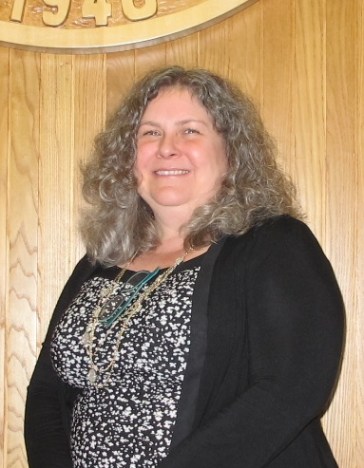
DeSoto, TX Councilwoman Candice Quarles

Q: Since DeSoto is clearly superior to cities that have not won the award, is there any trash talking you’d like to do to those lesser cities? The Elkhart, Indianas or Memphis, Tennessees that couldn’t find their way out of a paper bag if their public works budget depended on it?

A: Trash talking? No, but head to head, pound for pound, my city I certainly uplift and let you know anytime, anywhere that I’m from DeSoto!

Q: I noticed that you posted this on Twitter:

How did this gravy train of beverages get started?

A: So on the DeSoto city council, we are 100 percent volunteers. We do not receive any pay. A lot of times, I’m coming to council meetings after a full day of work. Sometimes the meal that we get, we might bring it to council work sessions.  [Other times] the staff has a meal. It could be Outback Steakhouse. It could be Boston Market. But my favorite part of the meal is a cold Coke. They place that at the desk and I just really appreciate it.

Q: Well, nothing is more all-America than a can of Coke and a hunk of meat from a steakhouse. Free soft drinks and meals are not the only bequeathals of yours at city council meetings. Why was getting a changing table in the men’s room in city hall important for you?

A: Young families are coming to the city and young families might visit city hall. Why would we have a changing table only in the mom’s restroom? Maybe mom is the one in the meeting. Or mom is the one doing something where she can’t go to the restroom and change the baby. If you were a working mom or a young family, it’s important. Once you’re past that phase, you probably don’t think about it. But I was in that phase.

Q: On February 7, 2017, your council was considering a rezoning request for an apartment complex on Pleasant Run Road. Many commenters who spoke against it were highly disparaging of renters–that we don’t need “those people.” “They” are dangerous. If I had heard this in any other city, I would assume it was coded language about race. But DeSoto is about 70 percent black and 15 percent Hispanic. What do you think they were really talking about?

A: Like you said, it is a majority-minority community. I wouldn’t say it’s just race. I would say it’s always class and race. It’s multi-layered. Maybe that’s their experience with the people they have rented with, but that’s not always the case.


Follow Councilwoman Candice Quarles on Twitter: @CandiceQuarles

Interview #121: Salt Lake City, UT Council Member Charlie Luke (with podcast)

This podcast interview is available on iTunesStitcherPlayer FM, and right here:

A historic council chamber. Mayor’s question time. And colorful, sometimes impassioned public commenters. These are the hallmarks of Salt Lake City’s council meetings that Council Member Charlie Luke walks us through.

Q: There is an aspect of your meetings that we don’t find in too many American councils: “questions to the mayor.” Why does this happen in your meetings?

A: Tradition. I don’t know when that practice started. It’s been rather hit and miss with mayors actually attending. A lot of times when they are there, we’re just happy that they are there. We’ve just been following the tradition.

Q: At the mayor’s question time of September 18, 2018, council members were upset that the mayor was not present to answer questions about the controversial Inland Port. Isn’t it unfair to say that the mayor doesn’t show up to answer questions when in fact your council oftentimes has nothing to ask her?

A: Absolutely not because most of our questions are going to be related to the items at hand. Especially when there is an issue where there is substantial council disagreement with the administration, there would have been questions for the mayor. That’s where a lot of the frustration was.

Q: So would it not be more realistic for the mayor to show up to the contentious issues, where maybe council members have given her a heads-up in advance that there will be questions, rather than expect her to come to every meeting just out of tradition and sit through silence while no one asks her anything?

A: We have roughly three formal meetings a month. In my opinion, it is not unreasonable for the mayor to attend those meetings. If we were having multiple meetings a week, I think your point would be valid. I don’t think it is asking too much for the mayor of the capital city of Utah to take an hour out of her agenda to sit through our meeting.

387631_158861697556245_975855060_n.jpg
Salt Lake City, UT Council Member Charlie Luke

Q: One year ago, your fellow council members–and you especially–were all set to fund 50 new police officers for Salt Lake City. Would you briefly explain why you wanted those extra cops while I go back to the car and run your license?

A: The response times for non-emergency crimes have been increasing steadily over the past few years. We knew that what we were tasking them [police] with was unsustainable. If we were going to get those response times down, the only way we could do it would be to add more officers.

Q: For half a year, there was an extraordinary amount of people–mostly young, but not always; mostly black and latino, but not always–who spoke up meeting after meeting against the police officers. Their message to you was that A.) more cops don’t mean better safety, B.) we and our communities actually don’t feel safe around police, and C.) you, the all-white city council, have a distorted experience with police that is not our reality. Your reaction to that is what?

A: Nationally, there have been issues with police and racial issues around the country. In the seven years I’ve been on council, we’ve worked closely with the police chief to better train our officers to deal with de-escalation. I’m not discounting what any of them have said. My life experience as a middle-aged white male is much, much different from people of color, women, and others. I’m not ever going to discount what they’re saying. But I am going to go off of numbers and what we’re looking for as a city.

Q: I don’t think that any of the commenters ever said explicitly that this increase in officers was emblematic of racism or white supremacy. But the message clearly was, “the city uses the police to intimidate and in some cases kill us.” I know that you strongly support the additional officers, but can you think of anything that would have to happen with the police in Salt Lake City for you to believe the argument they were making?

A: It’s not that I don’t believe the argument. I do believe that there is legitimate fear and concern. All I can do is try to improve the situation. I can’t go back and fix things that have historically happened. Since we do have to have law enforcement, let’s make them as best-trained as they can possibly be.


Follow Council Member Charlie Luke on Twitter: @CharlieLukeSLC

Interview #120: Clawson, MI Councilmember Susan Moffitt (with podcast)

This podcast interview is available on iTunesStitcherPlayer FM, and right here:

Susan Moffitt experienced an eventful first year on council in which chickens took center stage! She discusses how people’s backyard pets made the news and how the city is casual in some ways about its procedures.

Q: There is a majorly important subject that exploded in your council’s face last year. I’m talking about backyard chickens. Walk me through how Clawson pecked its way into the spotlight on the chicken issue.

A: Historically, although the city had ordinances that prevented having backyard chickens, the practice was sort of allowed. Citizens told stories of neighbors reporting them and the ordinance enforcer going, “yeah, it’s okay that we have chickens.” Someone in the city had a rooster and that led to some complaints. There was a directive to take care of the rooster, which was misinterpreted to mean, “let’s start enforcing the chicken ordinance.” Chickens used to be a barnyard animal. Now they’re kind of pets. So when letters went out saying you’ve got 90 days to get rid of your chicken, they interpreted it as: “you have 90 days to get rid of your pet.”

Q: Were you angry that you had to resolve a crisis that seemed to be created by previous councils and current city employees deciding to have zero tolerance all of a sudden?

A: I don’t think angry is the right word. Never should our citizens be blindsided; but having had that happen, we had a bunch of citizens engaged. It was great that so many people came out.

Q: You seemed to be very pro-chicken from the start. Other council members over the course of multiple meetings said, “well, at first I thought no on the chickens, but now I’m a maybe, and actually now I’m a yes.” Why do you think they ended up joining you? Did it have anything to do with the fact that people showing up to defend their chickens were normal people who looked and sounded like you all and used their chickens for companionship in a very relatable way?

A: I think that had a lot to do with it. People had those personal connections. Ninety-five percent of the people want chickens and five percent don’t want the chickens. The people that don’t want it, they don’t want it on principle. We’ve been able to refute all of their arguments. If you don’t want chickens, don’t have them. But you can’t reach into your neighbor’s yard and decide whether they’re gonna have them.

MoffittHeadShot.jpg
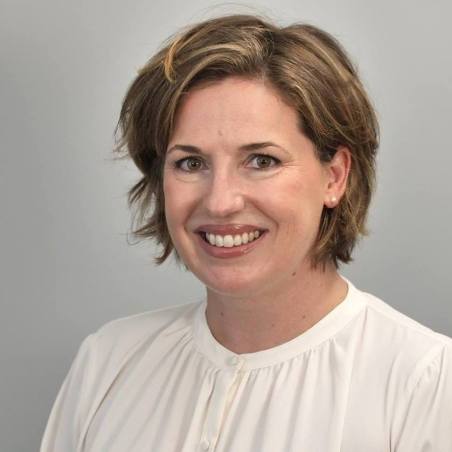
Clawson, MI Councilmember Susan Moffitt

Q: I’m sure you recall your recent meeting of January 2 when Councilmember Paula Millan objected to a vote to confirm the mayor’s appointees because the charter said the council was supposed to receive their resumes–and you did not receive them. How blindsided did you feel?

A: Not only was I blindsided, but the mayor was blindsided. What I don’t understand is if she felt she should have received something prior to the meeting, why she waited until five minutes before the meeting started to request it.

Q: How worried do you get about the city’s image and the confidence people have in the government when one council member waltzes in, pulls out their phone, and reads the section of the charter that you all are not following?

A: That’s one piece in all of the activities that we do. If they’re upset about it, they have the opportunity to talk to us. There’s a lot of pieces of our charter that are old or outdated. I always have concerns about following a law for the law’s sake. One of the things about our city that’s unique is that we have a sense of moving forward without being overly concerned about the laws on a regular basis–evidenced by the fact that we had a chicken ordinance that was prohibiting chickens and it wasn’t enforced for years and years. That’s how Clawson has been governed for a long time for good or for ill. The citizens seem to not be upset by those kinds of things.


Follow Councilmember Susan Moffitt on Twitter: @Moffitt4Clawson

Interview #119: Kingston, ON Councillor Mary Rita Holland (with podcast)

This podcast interview is available on iTunesStitcherPlayer FM, and right here:

Mary Rita Holland is in her second term as Kingston District 7 councillor and she describes the training that new councillors just received, accommodations for children in the meetings, and the choice she regrets from her first term.

Q: The Kingston city council recently started a new four-year term and one of your brand-new councillors, Robert Kiley, wrote in the Kingstonist, “Speaking of meetings, that’s how we finished our orientation: in a mock meeting, with funny motions, like establishing a public kale bar, which articulated step by step what happens around the Horseshoe.” Were you at that practice council meeting?

A: I was. We focused on introducing some new food options, including real dairy products, at our council meetings. Currently we use powdered coffee whitener for members of the public and for staff and councillors. One of the motions for debate was whether we should move toward real dairy.

Q: What was the final outcome of that debate?

A: We voted in favor of real dairy products in our council meetings and I think we also voted in favor of the recommendation for a kale quinoa bar. That was a little less contentious. We do want to see more people come to our meetings, so the better quality the coffee and milk, hopefully the better the attendance!

Q: On April 7, 2015, you proposed having childcare for certain public meetings. What is this revolutionary, socialist utopian idea of yours?

A: I am a single parent, but I was aware of the fact that I was probably the first member of council in a situation like this–where if our meetings went really late and I had a babysitter, that was a problem for me. So it seems like there are a number of barriers for younger members of the public to participate in our democracy. I thought by introducing childcare at meetings, it might mean that for those families who wanted to get out and participate, they could do that and they could feel very comforted that their children were having a good time in the room next-door.

44181459_2047520235309428_2015158196691271680_n
Kingston, ON Councillor Mary Rita Holland

Q: I want to take the listeners to June 13, 2017. This was the start of what ended up being a 10-hour meeting over two days about a “third crossing”–a third bridge over the Cataraqui River. Right up top, Councillor Peter Stroud attempted to curtail that by moving that the staff presentations get cut so the question time could start sooner. The council defeated that idea. I understand that Councillor Stroud stepped out. Would you describe to me what you recall?

A: He stepped out of the room. I stepped out at the same time, although that was not coordinated in advance. But we had the same rationale for getting rid of that briefing: we’d already heard the information more than once. We thought the time would be better spent hearing from the public. In a bit of an act of protest, we both left the council chamber.

Q: What did you do?

A: I found Councillor Stroud standing at the front entryway. The two of us stood there at the door and complained a bit about the motion losing. We were frustrated with how the entire vote and decision had been proceeding all along. We were talking about it in the entryway. That didn’t seem wise and we don’t really have a private room for our own discussions at city hall. He said, maybe we should go across the street to the pub and chat a bit more.

Q: Did anyone come up to you while you were in the pub and say, “hey, wait. There’s a council meeting and you’re councillors, so…what?!”

A: No. Of course I had it in the back of my mind that it wasn’t wise to be leaving the building, but I guess given the fact that I knew I had to go back to that meeting and be composed, I thought it made a bit of sense to go and calm myself down a bit. It turns out there were members of the media in the pub. When I went back to my seat in the council chamber, there was a tweet going around about the fact that we had left.

Q: Reflecting on that tweet, do you think that take of “walking out on the job” was an accurate one?

A: Yeah, and I’m laughing about it a little bit today but that turned out to be a very difficult time. I care a lot about public engagement and the public trust and I want people to not be cynical. When I realized that this would make people cynical about politics, that it was a bigger deal than getting out for a breath of air, I felt really awful about it. I should have stayed.


Follow Councillor Mary Rita Holland on Twitter: @MaryRitaHolland

Month in Review: December 2018

In the final month of 2018, we were fortunate enough to experience some of the most thrilling, most breathtaking council meetings of the year.

It was in December that we learned about the city council that was abruptly slashed in half by a higher power.

And it was in December when we heard from a city commissioner who essentially sat through a Trump rally and received heavy criticism.

Naturally, it was also difficult to escape the holiday cheer–like the city council that honored the best home decorations of Christmas 2018.

To look under the tree and see which December council meetings we wrapped for you, peek at the December Month in Review. (And check your stocking for the podcast.)

And if you are pondering why these people are dressed so festively, educate yourself by clicking here:

Screen Shot 2018-12-19 at 5.34.38 PM