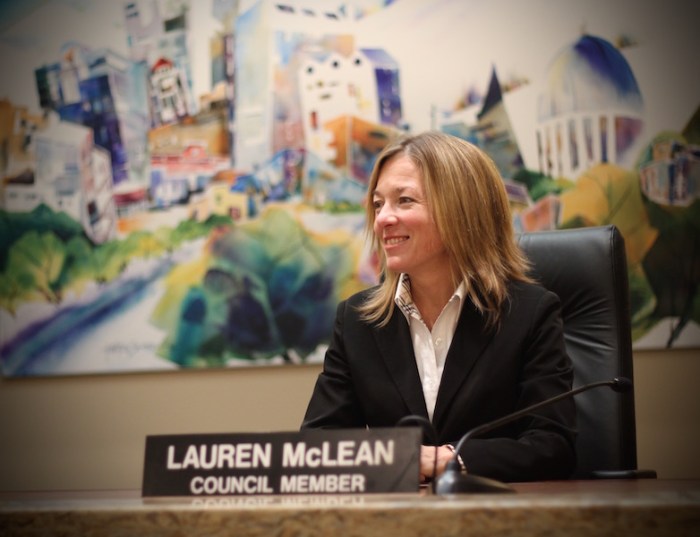
Interview #70: Mountain View, CA Councilmember Margaret Abe-Koga (with podcast)

This podcast interview is available on iTunesStitcherPlayer FM, and right here:

Mountain View is home to Google and to a very polite city council. Margaret Abe-Koga served two terms on the council, took two years off, then was elected again in 2016. She talks about the negative stereotypes she faced initially, how people treated her during her year as mayor, and her positive experience phoning in to a council meeting from home.

Q: It’s interesting–a lot of European cities do what Mountain View does, where the mayor is not elected separately, but a council member has the position for a year and it rotates. One thing I heard is that when you’re only mayor for a year, you don’t get as much respect. What do you think about that?

A: I definitely felt more respect. A former council member in Palo Alto who served as a county supervisor said one time how very few people know what a county supervisor does. But everybody knows what a mayor is because every city in the world has a mayor. There was that recognition. I was vice mayor to Tom Means and I had to fill in for him oftentimes. But when I would call and offer to show up, sometimes I would get declines because I was ONLY the vice mayor!

Q: Do you think that council members who talk for too long have been a problem in the meetings? Or does everyone hate a chatty council member until you bring up something THEY care about? Then all of a sudden, they don’t think it’s so bad to talk for ten minutes about it.

A: I think everybody starts out thinking that chatty council members are challenging but I would say we all at some point have been that chatty council member. When I first started, I actually had folks come up to me and say, “why don’t you talk more?” I did feel like I had to speak up just to speak up. The public noticed when I didn’t say much.

mak.jpg
Mountain View, CA Councilmember Margaret Abe-Koga

Q: When citizens said that to you, did you read anything into that? About you being a young person, a woman, an Asian person–how they were projecting their ideas of how you should present yourself onto you?

A: Yes. I had folks who thought I was nice and sweet. Some thought I was too sweet to be an elected leader. That was what one of the newspapers said about me, so they didn’t endorse me. [I’m] fairly petite, Asian, I smile a lot, but there definitely were stereotypes. When I became mayor, I had a hate e-mail saying, “you folks are overrunning the city. Go back to where you came from.” I frankly, unfortunately, expected that to happen.

Q: I should point out, you were the only Asian person on the city council. It’s hardly an overrun!

A: [Laughs]

Q: That makes me think about the rotating, one-year term for the mayor and I guess that’s a virtue of everyone having the chance to be mayor at some point. You get to try out a “nice” style. You know you’ll get your shot.

A: That’s true. It ties into the politeness of our council. The fact that we take turns is a very polite way of handling it….The downside is [the term is] short, but if you’re not doing a good job, it’s only a year!


Follow Councilmember Margaret Abe-Koga on Twitter: @margaretabekoga 
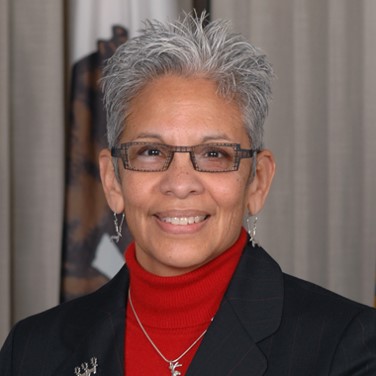
Interview #69: Daly City, CA City Manager Pat Martel (with podcast)

This podcast interview is available on iTunesStitcherPlayer FM, and right here:

Pat Martel has been working in government for over three decades and has seen a looooooooooot of council meetings. Plus, she served as president of the ICMA and got to hear from other city managers about their council concerns. We talk about how to ensure civil meetings and, if necessary, whether she would take a bullet for her council.

Q: As ICMA president, did any city managers e-mail or call you and say, “I am really struggling with my council meetings. What advice can you give?”

A: I have been asked that question. We recognized in ICMA that these are issues our members are struggling with. We have had sessions on this very issue–how to have civil meetings. There’s a need for us to solicit input [from the public], but it’s not useful input if we allow that to digress into yelling and screaming. Having the mayor understand that their role is to facilitate the discussion, but when it gets out of hand, to put a stop to that…it’s not infringing on anyone’s free speech to cut off conversation if it becomes uncivil.

Q: Mmm.

A: It’s also important for the city staff to clarify issues that the public may misunderstand. Or, worse yet, to try and identify the “fake news” on which people are basing their comments.

Q: Just for clarification, did any of the recommendations from that session include listening to the City Council Chronicles podcast?

A: [Laughs] No, but come to think of it, it should have! I have found listening very valuable.

Q: Thank you for saying that!

patmartel.jpg
Daly City, CA city manager Pat Martel

When did you accept the reality that as city manager, you are sometimes the face of unpopular proposals at council meetings?

A: I learned that a very, very long time ago. The position of city manager is a lightning rod for those who don’t agree with certain proposals. It’s not personal. Although council members and the public can make it personal. I think that oftentimes, council members who want to take me on on a particular issue see that the level of information I have exceeds what they have [and] they take it personally. My job is not to stand up to them. It’s to educate them about how things really work. I am really glad to meet with my council members before a meeting to go over things so I don’t have to present information to them in a meeting that will put them in a position where they look like they’re not very knowledgeable.

Q: In June 2014, the council was deciding whether to locate a cell tower in the city. After they voted in favor, a man rushed onto the dais and stood six inches from council members, jabbing his finger in their faces and yelling. How worried were you?

A: I was very worried. That’s one of the reasons why the police chief or one of his captains is always in attendance.

Q: If the chief was out of the room and an incident happened, would you take a bullet for your council?

A: I guess it would be my job to throw myself in front of that onslaught! While I don’t wear a badge, I have a sufficiently directive voice. I think I could probably calm someone down enough, so I would do it.


Follow City Manager Pat Martel on Twitter: @DalyCityManager

Interview #68: Boise, ID Council Member Lauren McLean (with podcast)

This podcast interview is available on iTunesStitcherPlayer FM, and right here:

In a first for City Council Chronicles, this week’s podcast guest gets her own piece of artwork to hang at city hall! I talk to Boise’s Lauren McLean about how her past as a dancer prepared her for council meetings. Plus, we spend a good while reliving the crowded council meeting from 2012 about an LGBT nondiscrimination ordinance with a surprise ending.

Q: I heard that you did competitive Scottish Highland dancing until you were 20 years old. What are the similarities between Scottish Highland dancing and the Boise city council meetings?

A: Oh, good question! Let’s see…you have to be super nimble, have lots of energy, a good sense of timing…

Q: Mmhmm.

A: …and want to win.

Q: Nice. Has someone asked you that question before?! That was remarkably fast.

A: No! I just made it up right now.

Q: [Laughs] I love it! Your council has met in several places. What has been your favorite?

A: I really love our current chambers. We have this great piece of local art behind us that is an artist’s version of what Boise is to her. I love looking at the piece, turning around and looking at it occasionally when we’re in longer hearing nights. At one point, it disappeared for about a week. That’s when I realized how much our council members really liked the piece because we got it back right away.

Q: If I were to draw something inspired by this interview, would you hang that up?

A: Um, I might hang it up in my cubby at city hall. I’m so excited to see what I’m going to have up in my cubby/cubicle!

IMG_2320.jpg
Hang it!

Q: On November 13, 2012 you were over at the state capitol. You had hundreds of people there to speak on a non-discrimination ordinance based on sexual orientation. For the first hour-and-a-half, this massive room, plus overflow, had to sit through a mundane set of hearings about planning and zoning. If you could do it again, would you get to the juicy stuff right away?

A: Actually, I’m going to say [pause], I think we would make them sit through it again! It’s the only time we can get an audience that big that sees all the things we deal with.

Q: Most people outside Idaho think of it as a place with potatoes and people who don’t like gay people. Were you worried that by having a hearing on television about this topic, the image viewers would see is one anti-LGBT person after another? Or, even worse, one gay-hating potato after another?

Lauren-City-Council1
Boise, ID Council Member Lauren McLean

A: I wasn’t worried at all. I know our city. The image many people outside of the state have of Idaho is very different from the reality. Really progressive, vibrant, fast-growing cities and universities.

Q: Yeah, and the mood at times was actually pretty light. The mayor didn’t allow clapping, but he did let people do “spirit fingers.” Did the spirit fingers last beyond that one meeting?

A: They did! You don’t see them in council meetings, but when the proponents of the measure came back after the ordinance was passed, [the spirit fingers] came up again. It’s something that I see often in Boise now amongst council members and others–it’s lived on.


Follow Council Member Lauren McLean on Twitter: @laurenmclean

Interview #67: Duluth, MN Councilor Noah Hobbs (with podcast)

This podcast interview is available on iTunesStitcherPlayer FM, and right here:

Noah Hobbs is a first-term councilor in Duluth who has a strong opinion about how his city council should spend its time during meetings. He and I discuss the role of the council president, creative ways to cut off rambling public commenters, and (listen to the audio) I make my best attempt at convincing him to give me the “Distinguished Artist Award.”

Q: Let’s go back to December 2016. The council was considering a resolution to support the Standing Rock Reservation protests against an oil pipeline in North Dakota. You voted for it and seemed to say, “I’m fine with this, but it’s not really our turf.” 

A: Yeah, I think that focusing on core local government issues is where we should spend a large part of our conversation. All the press after that about a resolution that was nonbinding [and] didn’t really affect the day-to-day operations of the city….I do get a little frustrated when we get off-track. I’m not necessarily in the majority on the council with that point of view.

Q: I would point out that for weeks afterward, people came into the council meetings to praise you guys for that vote. Did that make you feel any better about it?

A: Not really. It was an organized effort to make the council–that took a beating from the business community–feel better. It was more a continuation of a story that didn’t have legs, that ended up having legs.

Q: This January, you ran for council president against then-Vice President Joel Sipress. Here is what he said:

What we’re really voting on here is two different understandings of the role of the council president. The argument that Councilor Hobbs has made involves a list of priorities. That’s a traditional role of a council president in large cities like New York or San Francisco where the council president is a power position that drives the agenda.

noah
Duluth, MN Councilor Noah Hobbs

Noah, would your first action as a New York City-style council president have been to declare the areas of the city where–HEY, I’M WALKIN’ HERE!

A: [Laughs] I do think it’s important to have a council agenda. Our core function is pretty much approving the budget for the mayor. You can have nine different councilors doing nine different things and at the end of the year accomplish nothing. Having an agenda is important to show that we do more than approve the budget.

Q: One criticism I do have of President Joel Sipress is that he is way too “Minnesota Nice” when he tries to cut off public commenters who have reached their time limit. If you were president, how would you cut off a time hog?

A: Yeah, as a born-and-raised Minnesotan, I don’t know if I could do much better. Maybe using the gavel to tap once to get attention and say they’ve got ten seconds left. But as a Minnesotan, that is something we struggle with.

Q: Have you ever thought about hiring some muscle to escort people from the podium?

A: I don’t know if the constituents would really enjoy hiring a bodyguard for council chambers. I think we should get a basketball buzzer. Get a shot clock and when it gets to zero, just have the buzzer go….There’s nothing unconstitutional about that.


Follow Councilor Noah Hobbs on Twitter: @Hobbs_Duluth

Special Feature! “A Very Texas Proposal”

Regular listeners of the podcast will know that whenever something unusual or exciting happens in the world of city council meetings, people let me know about it through The Listener’s List. Last week, I was made aware of a super-duper special occurrence:

A marriage proposal at the Flower Mound, Texas council meeting by town manager Jimmy Stathatos! I talked to him and got the play-by-play, which all of you hopeless romantics will want to experience on iTunesStitcherPlayer FM, or right here:

flowermound
Photo source: Town of Flower Mound

Q: Did you have any alternative romantic spots in mind to propose, like the Kroger or the water treatment plant?

A: [Laughs] She is a huge sports fan, so I thought about going on the field at a Rangers game. But I thought that was kind of cliche-ish. That’s how I settled on town hall.

Q: I heard that pretty much the entire town was in on what you were going to do, except your fiancé.

A: It was the worst-kept secret! I was surprised she didn’t find out.

Q: Well, yeah, how did you get an entire town of Texans–who are used to shooting things off–to not shoot their mouths off?

A: I threatened them with code enforcement! I’m kidding; I got lucky.

Q: How could you stay focused when you were giving the announcements earlier in the meeting? You seemed a lot more nervous than during the site plan approval for Jerry’s Express Car Wash, but not quite as nervous as during the rezoning for Lakeside Crossing. Am I off base here?

A: No, you’re awesome. You watched! My stomach was in knots. Everytime they were talking about something else, I’m like, “just let me go!”

Q: If someone were to propose at a city council meeting, it seems like they could do it as a total surprise or they could use your method of doing everything short of getting a permit. If one of your employees wanted to do something similar, which way would you prefer?

A: Probably the surprise route. My way worked because I was able to tell the people that needed to know. But also, it is the people’s business and I didn’t want any of my bosses to be offended because I used that venue. But I think people that work for me know that I would be cool with whatever.

Q: Well, my friend, I have a little surprise for you. City Council Chronicles is going to send you on an ALL-EXPENSES PAID HONEYMOON TO–hold on, let me check my bank account….Wow, cannot do that.

New plan: one thing town council meetings are good for is issuing proclamations. And we at The Chronicles have drafted the following:

WHEREAS, Jimmy Stathatos and Michelle Dishman have been engaged since September 2017; and

WHEREAS, Jimmy Stathatos has been a faithful public servant in Flower Mound, Texas; and

WHEREAS, the town council proposal reminded people that government employees are creative, thoughtful, and mindful of their community, and that you should always be watching city or town council meetings for surprises;

BE IT THEREFORE RESOLVED THAT [insert marriage date] be known as Jimmy Stathatos and Michelle Dishman Day.

Now, previous podcast guest and councilman in your neighboring city of Lewisville, TJ Gilmore, will get this signed, sealed, and made the law of the land. What do you think?!

A: That is awesome! He is a good man.

Interview #66: Ottawa, ON Councilor Michael Qaqish (with podcast)

This podcast interview is available on iTunesStitcherPlayer FM, and right here:

Michael Qaqish is in his first term on the Ottawa city council and we had a lot to talk about: his appearances on the “Man Panel” and “Fun Friday,” but also his thoughts on bilingualism, distractions, and protesters in the council chamber.

Q: Do you know when you are on camera in the meetings and think about how to come across best on TV?

A: Yeah, it’s funny because I sit on the left side of the table. The camera is usually in my left corner so I never get picked up. I don’t get much on the camera, but we’re all sort of aware. I’ve also had photos snapped of me at committee or council where I didn’t realize they were, so sometimes we’re not necessarily staring at the media.

Q: In the U.S. there are certainly politicians who are obsessed with their image, watching hours of cable news while sitting in the White House (not naming names). Do you ever go back and look at council meeting videos or media coverage of yourself?

A: I want to learn from what I see: am I doing it right? Do I look okay? Do I speak fast, slow? So whenever I do an interview I try to catch it and improve. Do I watch council videos? No, I don’t! [Laughs]

Q: What behavior do you sometimes see in council meetings that grinds your gears?

A: One of the things I don’t like is when people around the table or in the audience start talking and–especially when somebody says something and they don’t agree with it–they start, “ugh!” or making noises and starting to have side conversations. Whenever I have an opportunity to raise it with a chair of a committee or someone else, I do take the opportunity to raise that.

qaqish
Ottawa, ON Councilor Michael Qaqish

Q: I noticed something that disturbed me: your councilors sometimes speak in English one minute and then in French the next. Please explain to me–IN FRENCH–why you guys can’t pick a language!

A: [Laughs] Well, my French is not as advanced as some of my other colleagues. We have a couple of Franco-Ontario colleagues. I was taking French classes and I took a break in the summer. Bilingualism is part of our culture.

Q: Do you think the councilors who switch to French know they’re doing that? Does it serve a purpose?

A: Some of the councilors are French. Councilor [Mathieu] Fleury has a lot of [constituents] whose first language would be French. For some of them it’s a personal thing because they want to maintain the langauge. But for some of them it’s to let their residents know–who are predominantly French–that they are asking questions in French as well.

Q: In the meeting of April 13, 2016, there was a lengthy discussion about how to regulate Uber. But one angry taxi driver stood up and yelled at you all for nearly two minutes. Do you guys have security there?

A: We do have security. Those situations are always tricky because on the one hand, you don’t want to create a scene. But give them a couple of minutes to vent and it’s done. He wanted to get something off his chest and he did. I think it’s okay for people to vent. We didn’t need security–the people around him were telling him to calm down.


Follow Councilor Michael Qaqish on Twitter: @QaqishPolitico

Interview #65: London, UK Assembly Chair Jennette Arnold, OBE (with podcast)

This podcast interview is available on iTunesStitcherPlayer FM, and right here:

Jennette Arnold is a Labour Party Assembly Member who has been chair for several terms. We discussed how London Assembly meetings are radically different from U.S. city council meetings–plus some juicy stories about former Mayor Boris Johnson.

Q: Madam Chair, I see you are an Officer of the Most Excellent Order of the British Empire. 

A: I am.

Q: So, “Most Excellent Order”…are you a knight?

A: [Laughs] Only an American would ask that question! Knights are men and the equivalent of a knight would be a baroness and I’m not that. I’m just straightforward Jennette Arnold, OBE.

Q: Gotcha. In the U.S., most city council meetings cover things like zoning, passing laws, and honoring groups in the community. What is the primary function of your assembly meetings?

A: Our governmental structures are very different. The main power that we have is whatever the mayor does, we have the power to call him in front of us so that he can give an account to Londoners through our questioning….Scrutiny is relevant, it’s informed, and you can bring it alive by using case study and evidence from Londoners.

Q: What do assembly members get out of the questioning and what does the mayor get out of it?

A: I think there is something about the political exchange that is adversarial. I’m sitting in the chair aways thinking, “is this member going too far?” That’s in terms of inappropriate language, going outside the mayoral remit, getting personal. My job is to always be monitoring and when I see a member has just about reached the line, to come in and remind that member he has now stepped over the line.

jennette
London, UK Assembly Chair Jennette Arnold, OBE

Q: You had some tough questioning of previous Conservative Mayor Boris Johnson. But if a Conservative assembly member grilled your Labour Mayor, Sadiq Khan, and the crowd was cheering that member on, would you shut down that applause?

A: No, I wouldn’t. My job isn’t to stifle the feeling of the meeting. If you’re chairing a charged meeting, you have to be very careful in terms of the interventions. I don’t see it as my job to stop what I call that “energy,” which is a reflection of people’s feelings.

Q: Has a constituent ever come up to you after a meeting and said, “I saw what you did there and I like that you gave the mayor the business?”

A: I can refer you back to the applause in the chamber with the questioning I carried out of Boris Johnson. I remember a school closure. What this school was looking for was for their mayor to hear their case. A cross-section of the school came and I was speaking on their behalf. And I didn’t know that they brought a cake. [Johnson] was not listening. He was not making the proper responses for the young people.

Q: Hmm.

A: I said, “oh, come along. They brought a cake for you! Don’t be so mean!” Everybody laughed and he laughed and it took the heat out of the room. At the end of the meeting, I met the young people downstairs and he just happened to be passing. It was lovely to see the young people surrounded him and there was no getting away from them!


Follow Assembly Chair Jennette Arnold on Twitter: @JennetteArnold

Interview #64: Mobile, AL Council Member Levon Manzie (with podcast)

This podcast interview is available on iTunesStitcherPlayer FM, and right here:

Levon Manzie is a reverend by day who served on the school board and recently won his second term as the District 2 representative. He shares how he benefits from having prayer in the council meetings, plus his thoughts on rules and compassion. And be sure to listen to the audio–I give him some suggested catchphrases for District 2.

Q: Every Mobile city council meeting opens with a prayer. Whenever you give that prayer, how is it different from the prayer you write for Sunday morning?

A: To be honest, it isn’t that much different because I really don’t write it. When I’m called upon, I seek inspiration. At that moment before a council meeting, I wanted god to bless what we were voting on. What we were deliberating over touches the lives of [thousands of] individuals.

Q: Have you ever watched someone else give the prayer and thought, “oof, that’s a little heavy handed?”

A: That has not happened to my knowledge. The scheduler tries to have a variety of ministers offer the blessing. Now, there have been some I thought were too long!

Q: [Laughs] Would you ever begrudge someone who says, “this is a business meeting. I don’t think it’s appropriate to be praying.”

A: I wouldn’t begrudge someone. But for me, I think prayer is most appropriate. Just last week to the right of us, Hurricane Irma. To the left of us, Hurricane Harvey. So I’m not ashamed about being mindful that we’ve been blessed and it’s most appropriate to acknowledge that. Again, those are my personal views. I believe most persons would pray specific to the city of Mobile or a general prayer asking for guidance in a general sense.

levon
Mobile, AL Council Member Levon Manzie

Q: You were on the school board before this. Is the difference between school board meetings and council meetings like the difference between the minor leagues and the major leagues? Or between decaf coffee and a shot of espresso? How would you compare them?

A: I think decaf and espresso would probably be the best analogy. On the school board we dealt with one overarching theme, which was providing quality education. Everything was judged off of that standard. Every contract. Every appointment. Every vacancy. Here in the city, it’s not as single-focused.

Q: How would you describe council President Gina Gregory’s style at running meetings?

A: You know, she’s a veteran. She’s compassionate, sometimes allowing individuals to go over the alloted time so they can completely finish their thought. But she’s also orderly. And when people go off topic or when they abuse their time, she knows how to be strict.

Q: So you’re saying that compassion and rule-bending are just as important in some situations as being strict and treating everyone the same in every circumstance.

A: Well, one hundred percent. You have to be as compassionate or as strict as the person will allow you to be. If you’ve got somebody who is causing a ruckus in the meeting, there isn’t any room for compassion. But if you’ve got an individual who is impassioned about changes that are proposed for his or her community and they’re about 90 percent from finishing a complete thought and they’ve followed the rules, it’s incumbent upon you to judiciously allow some rule-bending. And I think she’s mastered that.


Follow Council Member Levon Manzie on Twitter: @lcmanzie06

Podcast in Review: 2016-2017

It’s a joyous week here at The Chronicles: our podcast is a year old! It seems like just yesterday that we were interviewing people about their city council meetings using a wax cylinder attached to my great-grandma’s phonograph.

For our regular listeners, it may come as no surprise that we have recorded

51 interviews

Of those guests,

67% were council members 👪

16% were mayors 👨‍⚖️

14% were municipal staff 💼

Geographically,

24% were from the Southeast ⛪️

20% were International 🚅

18% were from the Southwest 🌵

14% were from the Midwest 🌽

12% were from the Northeast 🗽
12% were from the Northwest 🌧️

And demographically, the guests were

51% male ♂️

 49% female ♀️

If this is the first you are hearing of the podcast, buddy have I got a hyperlink for you. Check out ALL of our episodes right here.

Editor’s picks

To celebrate the occasion, we have a special one-year recap episode with highlights from five interviews. That audio is available on iTunesStitcherPlayer FM, and right here:

The excerpts included are from these episodes:

  1. Interview #62: Jefferson City, MO Mayor Carrie Tergin [featuring International City Hall Selfie Day]
  2. Interview #52: Raleigh, NC Councilor Corey Branch [featuring presents]
  3. Interview #49 Johannesburg, ZA-GT Councilor Michael Sun [featuring singing and dancing]
  4. Interview #51: East Point, GA Council Member Alexander Gothard [featuring ejection]
  5. Interview #55: Idaho Falls, ID Mayor Rebecca Casper [featuring friendship]