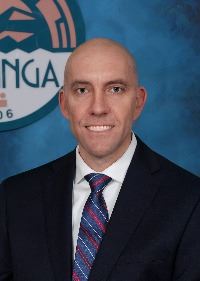
Interview #131: Durham, NC Council Member DeDreana Freeman (with podcast)

This podcast interview is available on iTunesStitcherPlayer FM, and right here:

DeDreana Freeman describes Durham’s procedure for providing translation services at council meetings, plus a handful of contentious issues that turned out large numbers of emotional commenters: including alleged anti-Semitism and a planned railyard close to an elementary school in a wealthy neighborhood.

Q: Durham’s population is, I believe, about 15 percent Hispanic. Occasionally you do have Spanish speakers come in to comment to your council. I was a bit surprised at the March 4 meeting this year to hear a woman give her remarks in Spanish and no translation for her was present. One commenter even criticized the city for it. Why was that unavailable here?

A: If it’s not requested in advance, no one’s made available to do translation. Same thing for sign language or disability. The plan is to try and make it more visible how to make that request. I think it was a well-timed smack on the wrist. “You guys need to be paying attention to this.” I appreciated it.

Q: When Durham was firing on all cylinders, you had a robust method of handling translation. In January 2018, you had a vacancy on the council and the other council members had to fill that spot. It’s my understanding that there was English-to-Spanish translation in the room for people who picked up headsets from the city. How much effort did that take to coordinate the realtime translation?

A: There are service providers in the city who offer this service. All we do is make a phone call. It’s not difficult, it’s just a matter of being aware.

Q: In April 2018, there was a meeting that touched upon human rights, race, and institutionalized discrimination. If I gave the listeners ten guesses, they probably wouldn’t come close to knowing what you spent two hours of that meeting talking about. Why was Durham, North Carolina concerned about…Israel?

A: I don’t think the concern was around Israel. I think it was specific to the claims that our police were engaging in militarized training.

DeDreana Head Shot Photo.jpeg
Durham, NC Council Member DeDreana Freeman

Q: Who was making those allegations?

A: There were a number of groups making those allegations. Apparently there was a pamphlet from the Israeli military police that presented that Durham was one of their clients.

Q: At this meeting, the council was voting on adopting a statement that Mayor Steve Schewel wrote whose message was: Durham will not adopt military-style training for its police force, mainly because that exacerbates the problem of racial profiling. However, there was this introductory paragraph of the letter:

Screen Shot 2019-04-13 at 8.39.03 PM.png

It turns out that mentioning Israel and police training in the same thought was enough to cause some people–and by “some” I mean 50 public commenters–to put the gas pedal to the floor on accusations of anti-Semitism. Did you sense whether Mayor Schewel, who is Jewish himself, felt bad that he inadvertently dragged your council into an accusatory environment? Or did he appear, as I would have, that “I don’t understand what you’re mad about?”

A: I’m not sure. I know that we all stood firm behind the chief’s response to the accusation that we were doing militarized police training. Folks can be offended, but it doesn’t mean that the offense was intentional. It’s okay to hear back that you are offended.

Q: Almost a year later, have you studied up on anti-Semitism and now feel that “yes, I see where they are coming from”? Or are you still mind-boggled that the mere mention of Israel for some people is like using the N-word?

A: I think I understood it then, it was just more important to make clear that we were not engaged [in militarized training]. I’ve had plenty of conversations to hear perspectives that are different from mine. I can completely be empathetic to the feeling of the sentiment that was received.

Q: So if you truly felt you were being anti-Semitic with this statement, you would’ve owned that? You would’ve avoided it in the future?

A: Of course. If I thought it was the case, I would. I’ve encouraged everyone who’s had anything to say about this situation to say what you need to say. It is when you speak for yourself that you get what you need out of it.


Follow Council Member DeDreana Freeman on Twitter: @Freeman4Durham

Interview #130: Linden, NJ Councilwoman Rhashonna Cosby (with podcast)

This podcast interview is available on iTunesStitcherPlayer FM, and right here:

Rhashonna Cosby is a longtime councilwoman (and newly-minted podcaster) who is none too happy with the drama and conflict that unfold in many Linden council meetings. She discusses her interpretations of new council rules and advises fellow council members on how to receive a little less heat from commenters.

Q: To the extent that there is discord or dysfunction in your council meetings, what do you feel causes it?

A: There’s a power struggle in my opinion. It’s not about anybody having a great idea or someone doing something detrimental to the community. It’s clearly and only about power–who controls what. For so many years, we had a good council. It wasn’t as bad as it is now.

Q: What was the turning point do you think?

A: The turning point was the election in 2014. I ran for mayor and after that election, two of my council colleagues were no longer colleagues. They were more like adversaries. I couldn’t understand why. For whatever reason, they are now aligned with the current mayor who won that primary.

Q: I notice that you abstain on council votes more often than your other colleagues. What is your personal policy on whether you will abstain?

A: If it’s a personnel matter, I will abstain so that I won’t get a violation filed against me by an employee. In our city, if you vote no against an employee, they tend to take it personally and then they want to file an ethics complaint or some kind of legal complaint. It’s less time and less drama if I just abstain.

Q: Can you explain a little more about what hypothetically you might be asked to vote on that is a personnel issue where you want to vote no, but out of caution you abstain?

A: There’s an employee who I filed a complaint against and that employee, who had an open complaint, was put up for promotion. I definitely wanted to vote no and the attorney said to me, “Rhashonna, it’s probably best if you abstain to avoid any conflicts.” So I abstained. Again, I don’t even vote anymore on personnel because they’re not hiring according to the policies that we should be. It’s not fair. It’s not transparent.

54798525_10157415704383754_6024844861423747072_n.jpg
Linden, NJ Councilwoman Rhashonna Cosby

Q: Your council instituted a new five-minute limit on the commentary that each council member is allowed during the meetings. Did you see that as being aimed at you?

A: Absolutely.

Q: In what way?

A: My reports are usually the longest. My reports were always thorough. I would give my reports on my committees and I would lead into my community reports and initiatives. I think my longest council report may have been, like, 12 minutes. The complaint was, “the meetings run too long.” That’s not my fault. If the people actually gave real reports, they would probably be longer than they are. But they want to go back and forth and arguing, making comments about what someone else said instead of giving a report on their initiatives.

Q: Linden has monthly meetings that go on for three, four hours each. Do you see any merit to making the meetings weekly or twice monthly so that they will be shorter?

A: I recommended four years ago that we have our meetings [work session and council meeting] a week apart. Once we adopt our agenda, we can publicize the proposed resolutions and ordinances. If people have a question during that week, they can make a call to city hall and get those answers. So the meeting would be shorter because it’s less time with providing those explanations.

Q: Okay, so separating the work sessions from the council meetings more than the, I believe day–or 24 hours–that they currently are.

A: Right.

Q: It seems as if people bring into the council chamber all of the emotional and political baggage that they are experiencing outside of the meetings. There should be a middle ground between a council member having to sit quietly and ignore the abuse they are receiving for their job, and yelling at their antagonist. Where do you come down on that?

A: When the person comes up, they’re not necessarily attacking us individually so much as they are making public some of their dissatisfaction with their representation. You have community meetings where they come and have that forum. So I have community meetings every three months and the people come if they have issues. That’s the place for that.


Follow Councilwoman Rhashonna Cosby on Twitter: @Rhashonna10

Podcast Recap: Spring Break Special

We are spending spring break at the beach this week, but you can listen to a “best-of” podcast episode on iTunesStitcherPlayer FM, and right here:

CCC_Logo.JPG

On this episode, you will hear excerpts from these full interviews:

1. Interview #127: Baltimore, MD Councilman Kristerfer Burnett (with podcast)

2. Interview #129: Portsmouth, NH Councilor Nancy Pearson (with podcast)

3. Interview #67: Duluth, MN Councilor Noah Hobbs (with podcast)

4. Excerpt from “Tear It Down”

tear-it-down-logo-with-bricks-2.jpg

As always, the podcast’s sponsor is Dig Deep Research. They assist local governments in obtaining grant money and are eager to hear from potential new clients. Find out how they can help you today:

DigDeepLogo-1

Interview #129: Portsmouth, NH Councilor Nancy Pearson (with podcast)

This podcast interview is available on iTunesStitcherPlayer FM, and right here:

The Portsmouth council has pioneered a “public dialogue” session at some of their council meetings in lieu of public comment. Nancy Pearson discusses why it is an attractive option, why many residents initially opposed it, and why it’s unconcerning that the public dialogue remains untelevised. Plus, on the podcast you will hear about one former council member’s crusade against closed-door meetings.

Q: At the February 4 council meeting, I heard Mayor Jack Blalock say that Portsmouth council members only get paid for 20 of the 22 meetings every year. Are you being forced to work without pay during those other two?

A: It’s a tricky thing in New Hampshire. Not all of our municipal duties are paid assignments. We all have day jobs that actually pay the bills and we are given a stipend for each of our council meetings with the exception of the last four meetings of the year. We are capped at $1,500 a year. One of our council members, Josh Denton, was bringing to the attention of the council that we might look at lifting the cap so we can be compensated for each and every council meeting.

Q: How do you feel about this?

A: I think he brings up a good point. If you can compensate the volunteers [council members] for each and every meeting, that might go a little bit more toward leveling the playing field. For example, one of the council members said he uses the stipend to buy attire to wear to council meetings, as he is a contractor and doesn’t necessarily have a closet full of suits and ties. I understand his point. I think it’s fair.

Q: At the Portsmouth city council’s retreat in 2017, you graded your council a “C” on the effectiveness of public comment. Look, normally I only invite on guests who have a “B” average or higher, so you’d better be killing it in biology and calculus for this interview to continue. What should your council have been doing better?

A: Up until that point, we had an antiquated system for public engagement. We came up with [an alternative to] every single meeting having a 45-minute public comment session. It doesn’t allow the opportunity for us to answer questions or engage in conversation or alleviate concerns. One of the things we’ve done now going on two years is public dialogue. We do these every other meeting. It happens before the city council meeting. If there’s a large crowd, we break up into two groups, the city council does. But we sit in an equal circle. The public has an opportunity to ask us questions and we can answer them either ourselves or the city staff is all there.

Q: Okay.

A: I was also finding that during public comment, people were saying things, making things up. Things are being put into public record that are not based in reality. That bothers me a little bit. I didn’t want to let the opportunity go by where we couldn’t correct some things or provide the right information.

12004053_1635259440081723_6272228641264588510_n.jpg
Portsmouth, NH Councilor Nancy Pearson

Q: You sound an optimistic tone now, but originally the public commenters were hostile to the idea of putting public dialogue where public comment normally is. Do you not televise the public dialogue?

A: That is correct. If we break up into two sessions, that would be very challenging to televise. The community often has a reaction to change like that. They don’t understand it. Portsmouth has a long history of resistance to change. We’re called “Granite Staters” for a reason–we’re very rock solid in our beliefs.

Q: It strikes me that one of the benefits you listed of public dialogue was correcting misinformation that circulates in public. By not televising public dialogue, are you not missing the opportunity to correct it and broadcast it to the whole city?

A: We do keep minutes and we do an oral debrief of public dialogue at the city council meeting directly following.

Q: If you have all of the councilors in a room–or five out of the nine, which is a quorum–are you running into any ethical or perhaps legal trouble by not televising what is perhaps a meeting of the council?

A: No because televising a council meeting is not a mandatory exercise. As long as we are taking meeting minutes, which happens at each table by our city clerk, that suffices every legal obligation we have.

Q: But you would concede that while you are doing what’s required, you could also be doing more?

A: Well, one of the things that we discovered and one of the reasons we moved toward public dialogue is because while there are many people who enjoy coming to the podium, speaking their mind, and having that televised, there are an equal amount of people that are reluctant to come and speak to council because it is televised. In the spirit of egalitarianism, the public dialogue is attractive to those people who are intimidated to come to the podium to speak in public.


Follow Councilor Nancy Pearson on Twitter: @Nancy_Pearson20

Interview #128: Dubuque, IA Council Member Luis Del Toro (with podcast)

This podcast interview is available on iTunesStitcherPlayer FM, and right here:

Luis Del Toro entered the Dubuque council in 2016 and explains how he became a bit of an iconoclast, not shying away from dissent or from pushing policy changes. Plus, he clarified why council members seemed so critical of the renters and landlords who came before the council to ask for a ruling.

Q: I noticed a little over a year ago that people started coming into the council meetings to speak about source-of-income discrimination. How did Dubuque get roped into the fight for economic justice?

A: When it came to housing choice vouchers, the city got themselves in a little bit of hot water with [the Department of Housing and Urban Development]. We had some ways that we were trying to divvy those out, and that was seen as discriminatory by HUD. We had to come up with a plan, but we had citizens petition us to make the acceptance of those vouchers mandatory. We’ve opted to not get to that step yet.

Q: Right, the more moderate solutions were what your council voted on in early 2017. However, all of a sudden, Council Member Kevin Lynch broadsided the commenters in the room, scolding them for not working cohesively. How did you feel about that?

A: What he’s referencing is we had a source-of-income committee that was a combination of organizations within our city as well as the landlords that were supposedly trying to come up with a plan for us. What seemed to come out of that was more of an us-versus-them them perspective. They weren’t listening to each other. They couldn’t agree upon what presentation they wanted to bring before council.

Q: The council members seemed to be saying, “you all should have agreed on your own rather than come to us to decide for you.” That took me aback because that is what the government does all the time: it resolves policy disagreements by deciding what is the law. Were these council members offended that they had to make a decision on something?

A: I wouldn’t necessarily say that. I think it was the expectation of having a lot of smart people in the room and a lot of individuals that are very capable of coming up with a solution that actually showed some partnership between the two groups.

Document-2
Dubuque, IA Council Member Luis Del Toro

Q: I get the impulse to chastise the two sides, but isn’t it a bit naive to think that two groups of people with very different economic interests will find the common ground that you think they have? Was this a small town expectation of civility that you were projecting onto them?

A: It could be viewed that way. We are a little bit smaller and we’ve always prided ourselves in being able to find answers to problems that seem a little bigger than we are.

Q: On February 18 this year, you proposed an emergency cancellation policy for city council meetings in cases of inclement weather. I assume this covers blizzards, floods, and deluges of presidential candidates?

A: Well, apparently yes! We did vote later that evening to change our upcoming meeting next year due to the caucusing here in Iowa. But right now, our only provision within our city code is we can make adjustments to our meeting date and time 30 days in advance. Obviously, a lot of things can happen in 30 days. This year, we had wind chills that were 60 below. Travel wasn’t advised. We had no provision in place that gave us the opportunity to delay our council meeting to possibly the next evening.

Q: Do you think the criticism from other council members and the mayor that “the council meeting must go on and we’ve managed in bad weather before” is a healthy attitude to have?

A: No, not at all. I respectfully disagree. It should come down to valuing the safety of our citizens as well as ourselves and city staff in trying to get to these meetings. There was a no-tow ban put in place. If you were out on that road and you went into a ditch trying to navigate our icy streets, no help was coming for you. With frostbite that could occur in five to ten minutes, those are dangerous conditions to expect individuals to attend a meeting.

Interview #126: Coalinga, CA Council Member Adam Adkisson (with podcast)

This podcast interview is available on iTunesStitcherPlayer FM, and right here:

Adam Adkisson has been a council member in the small city of Coalinga for less than a year, but he already has a restraining order against a public commenter and is collecting screenshots of online tormentors. What is transpiring in Central California?

Q: Your recent mayor, Nathan Vosburg, had a consistent grievance during his time in the mayor’s seat. How much did you agree with his complaints about negativity and non-participation by the residents of Coalinga?

A: We have a lot of issues with people getting on Facebook and spreading all kinds of lies and rumors about the city. People just take it and run with it. I understand where he’s coming from. I don’t know if I would’ve said it exactly the same way, but I share some of his sentiments.

Q: Normally we think of mayors as cheerleaders for their communities. Did it grate on you to have the mayor in public, on television, saying, “I’m sick and tired of the attitude around here”?

A: No! Sometimes we need someone to say it. People like honesty, so that’s what he gave them.

Q: At your first meeting in November as an elected council member, you said this in nominating Council Member Ron Lander to be the new mayor: “we need a mayor who will lay down the law….We need to quit having these outbursts. You have kids come in here and they have to listen to people throw around F-bombs.” Tell me more.

A: We have an issue with a few citizens who come to the council meeting and they think that certain chairs belong to them and they’ll start a fight just to prove it. We get people who come up–mainly two people–who come up to the lectern and start cussing and yelling. It just got out of control. The mayor now is gonna put an end to it and people need to act appropriately.

Q: On August 2, 2018, your council removed from the agenda a discussion about whether to allow drug testing and background checks of city council members because the city attorney advised that legally, you could not do that. This upset one commenter, who implied that he wanted to fight you.

A: He loves me. He was wanting me to go outside. He doesn’t even live in Coalinga. His mom accused me of being on drugs one time and I said that if she wanted to pay for my drug test, she could do it. If I passed, which I would, she would have to give an apology. That’s all I said.

Document.jpeg
Coalinga, CA Council Member Adam Adkisson

Q: By day, you are a bounty hunter. How surprising is it that you come into contact with more people wanting to fight you as a city council member than as a bounty hunter?

A: [laughs] That’s absolutely true. It’s crazy! I never thought it would be like this but you just gotta power through it.

Q: Is this affecting the city to have people bad mouthing each other and then bringing it to the council meeting?

A: Yes, it’s definitely affected us. It needs to stop and it has for the last couple meetings. I have a restraining order and everything is going a lot more smoothly now and we hope to keep it that way. The people of Coalinga should not be afraid to come to meetings. They should not have to listen to this kind of behavior.

Q: Have you considered pulling back from Facebook to avoid the confrontations that germinate there?

A: Absolutely. I’ve pulled back quite a bit. It hasn’t really changed anything. I probably have about 400 screenshots of lies that people have said about me. It comes with the territory.

Q: Uh, yes, to a certain extent all council members have to deal with that. But you’ve been on council for less than a year and you’re already collecting screenshots of lies? That seems unhealthy!

A: They’re sent to me, so I put it in a little folder that me and my friends can laugh at. I have to have some outlet. That’s my outlet.

Interview #125: Bloomington, IN City Clerk Nicole Bolden (with podcast)

This podcast interview is available on iTunesStitcherPlayer FM, and right here:

Nicole Bolden is a longtime employee of the Bloomington clerk’s office and is in her first term as the elected clerk. She reminisces about weaponry in the council chamber, her attempt at live tweeting the meetings, and a parking garage debate that stood out.

Q: You have been the clerk for almost four years and before that, I know you worked for the city clerk, sometimes being the fill-in person at the council meetings. How have the meetings changed in the ten years that you’ve been working for the city?

A: I don’t think the meetings have changed dramatically. In some respects they have calmed down. We used to have some citizens who were very active and engaged in the meetings, sometimes to comic effect. Most of our council members are pretty long serving, so they know what they’re doing. They have an established routine.

Q: What is some of the comic relief that we’re missing out on nowadays that you used to see at the microphone way back when?

A: We used to have citizens who would come in and talk about various things that concerned them, but they would also record themselves while standing at the podium. You would see people who were filming things for their own YouTube broadcast or podcast. There were people who would show up with hatchets. There were people who would show up with costumes.

Q: You had me at “hatchet.” Was this a prop hatchet or was this a threat?

A: Neither, it was just a hatchet that our citizen was carrying with him. He still comes to meetings occasionally. He sometimes comes with things that may cause a bit of concern, but that is what he is allowed to do.

Q: Indiana is a wild and lawless place, I love it.

Attachment-1Bolden-e1534476331401.jpeg
Bloomington, IN City Clerk Nicole Bolden

I noticed that last fall you live tweeted the council proceedings for one or two meetings and then you stopped. Why did you give up on such riveting tweets as

A: You know, there just didn’t seem to be a huge appetite for that type of tweeting. It’s something that we’ve discussed returning to, but for the moment it is one more thing to juggle during an already busy meeting. I have to be honest, I’m not great at tweeting. I feel a little old sometimes because I don’t know all the abbreviations people use!

Q: In the December 12, 2018 meeting, Council Member Allison Chopra complained about how meetings go way too late. If the council members have to stay late, you have to stay late. What are your thoughts on the duration of the meetings?

A: When I decided to run for city clerk, my family laughed at me. They said, “how on Earth are you going to be able to handle those meetings that go past your bedtime?” When I started, our council meetings used to start at 7:30 p.m., not 6:30. So that was one change that Allison successfully spearheaded through, which was getting the meetings started earlier in the hopes that when we did have longer meetings, people wouldn’t be leaving at 11:30 or 12 at night.

Q: During a contentious debate last year about whether to construct new parking garages, I noticed something unusual in the public comment. One of your employees in the clerk’s office spoke to the council on the topic. What have you told your employees about getting involved in council meetings?

A: I have told them that they are welcome to express their opinions to the council at any given time. I have also asked them that when they are speaking to the council, to make it clear they are speaking for themselves and not on behalf of the office.

Q: Is that a luxury that employees of other departments have? Or because you’re an elected official, do you have more freedom to tell your employees, “if you want to get a little political, have at it”?

A: I’m a separately-elected branch, so I don’t have the same chain of command that other departments have who all ultimately respond to the mayor. I don’t know of anybody who’s ever been told to not speak at a council meeting, but I know there are some people who may think twice.


Follow Nicole Bolden on Twitter: @ClerkNicoleB

State of the City Council Meetings Address 2019

190205220327-17-sotu-2019-exlarge-169.jpg

FOR IMMEDIATE RELEASE–For the third year in a row, Michael Karlik appeared before a joint session of Congress for the greatest honor any person can imagine, other than meeting Cher: he delivered the State of the City Council Meetings address. The standing ovations were numerous. The viewership was huge. And almost no one requested a refund afterward. Below is a transcript and audio of the entire speech, sponsored by Dig Deep Research, which is also available on iTunesStitcher, and Player FM:

Madame Speaker, Madame Tussaud, Mesdames and Messieurs: because of the solemn duty conferred upon me by the Constitution, and because there is no one else out there crazy enough to do this, I am here tonight to remark upon the city council meetings of the world. And I want to assure all of you that despite what you may hear from the fake, failing, or–if they’re nice to me–the perfectly fine news media, the state of our city council meetings is…can you scroll the teleprompter please? Strong. [applause]

Tonight, I will share with you stories of city council tests and city council triumphs. Although the tests are a lot more fun, you know what I’m saying? You know what I’m saying? [laughter]

Sitting in the gallery next to the First Lady is the mayor of Lakewood, Colorado, Adam Paul. [applause] Okay, he’s my guest, so next time please wait until I give you permission to clap, capiche? Last year, the Lakewood council had a crisis on its hands. What has a long tail, beady eyes, and a reputation for causing bubonic plagues? Rats. The pigeons of the ground. I actually brought a couple here tonight in this cage and oh, the cage is empty. Uh, that’s not good.

All right, here’s what I’ll do. I’ll release the rattlesnakes also to catch them and–okay, I’m seeing everyone shake their head no, so let’s put a pin in that. Anyway, the Lakewood city council had to act fast to keep the rats from multiplying. Here is their story.

***

Thank you for your response, Mayor. Please clap. [applause] But city councils don’t just respond to problems. They sometimes create their own. And when the Independence, Missouri city council voted to fire people in the Power & Light department, accusations started flying. Agnes, could you roll my interview with Independence Mayor Eileen Weir?

***

Okay, quick update. We found the rats. [applause] Yes, finding rats in the United States Congress is like trying to find a needle in a needle stack, am I right? [laughter and applause] All right, good night, everybody. Goodnight–what’s that? I’m contractually obligated for another 15 minutes? Okay.

Why don’t we check in on Canada? Someone has to, for security. Earlier this year, I became aware of a bizarre story out of Kingston, Ontario. A couple of councillors protested the council proceedings not with their words, not with their votes, but with their feet. Agnes?

***

You know, I always struggle with how to end these things. On the one hand, I want to stay and talk to you forever. On the other hand, I just got a foosball table delivered at home. Choices, choices. You know, I have some thoughts about illegal immigration and abortion that I’d like to get out there. It is terrible that–wait a minute. Callaway?

Hillsboro, Oregon Mayor Steve Callaway?! [applause] I can’t believe they let you past security! Mostly because I told them not to. But folks, during his state of the city address in January, Mayor Callaway gave a very important shout out that I noticed right away.

Yeah, you can clap for that. You can clap for that. In fact, I once interviewed Hillsboro’s city manager, Michael Brown, and we discussed how Hillsboro’s state of the city addresses are always the greatest show on earth.

***

Thank you. God bless you. And god bless city council meetings.

Interview #124: Independence, MO Mayor Eileen Weir (with podcast)

This podcast interview is available on iTunesStitcherPlayer FM, and right here:

On the podcast, Mayor Eileen Weir shares the logic behind the Independence council’s brand new public comment policy. Plus, we walk through one controversial week in summer 2018 in which people’s jobs were on the line and the charter’s rules were under scrutiny.

Q: You announced a new public comment policy at the January 22, 2019 meeting that eliminates advance sign-ups. Why the change?

A: The policy that we had in the past was the agenda comes out on Thursday and by noon on Friday, you needed to contact the city clerk if you wanted to speak to the council. If the agenda was late getting out or people couldn’t meet that deadline, they were not allowed to speak to the council unless they contacted a council member and asked to speak. The council member could request at the council meeting that we suspend the rules of order to allow somebody to speak.

Q: Wow.

A: Most people when they come to speak want to talk about something that the council’s gonna be voting on that night. We always have our citizen comments at the end of the meeting. If somebody wanted to speak on something that we were voting on that night, we would also need to suspend the rules of order to change that around. It seemed like we were making a lot of exceptions all the time. We hope that it’s gonna encourage some more citizen participation in our council discussions.

Q: I want to take us to June 18, 2018. Midway through the meeting, Councilmember Curt Dougherty announces seemingly out of nowhere that he wants to eliminate six positions from the Independence Power & Light utility. What was going through your mind?

A: It was a surprise to me. I didn’t know that motion was going to be made. People were caught very much off guard. It is in the authority of the city council to amend the budget, which was what the motion was. It’s not within the authority of the city council to do any personnel changes.

Q: The council voted 4-3 to save $1 million by getting rid of seven people’s jobs. A week later, the director of Independence Power & Light came to the meeting and criticized that vote. Where is the line for you between standing up for your employees and respecting the chain of command?

A: I think it’s naive to think that a city employee can stand up and be representing himself or herself as a citizen. We don’t get to take off those hats when we assume positions as city employees or as elected officials. I’m the mayor of the city 24 hours a day, seven days a week. The director subsequently resigned from the position. He clearly had that in mind when he chose to come and speak as a “citizen” to the council without the knowledge of the city manager.

4b1b9a26-82ea-431d-8e89-3ab58e68661d(1)
Independence, MO Mayor Eileen Weir

Q: And you think it was a resignation? Not something to send a message to other department heads that “if you show up and question council’s motives, this will happen to you, too”?

A: No, I don’t think it was that. I think he was clearly dismayed, and understandably so. But I don’t think that a city employee or elected official can come to a council meeting and speak and say, “I’m not here in my professional capacity. I’m here as a citizen.”

Q: At that meeting, Councilmember Karen DeLuccie made a serious charge that the council violated the charter with its vote the previous week. Here is section 2.15:

Councilmembers shall not direct the appointment of any person to, or their removal from, office or employment by the city manager or by any other authority, or, except as provided in this charter, participate in any manner in the appointment or removal of officers and employees….

Your reaction is what?

A: I voted against the motion. I voted for the reversal of that motion. Clearly I feel it is outside the council’s authority to decide what the positions should be or who should hold them. That said, the motion was to amend the budget. It really did fall into a gray area.

Q: There’s actually more to that paragraph because it goes on to say:

If any councilmember violates any provision of this section, said councilmember shall be guilty of a misdemeanor, and upon conviction thereof, shall be punished by a fine of not less than twenty-five (25) dollars nor more than five hundred (500) dollars. Any such conviction of any councilmember shall be cause for removal from office, and such councilmember shall be automatically removed by the said conviction….

Wow. Obviously, whoever wrote that was pretty damn serious about council members not hiring or firing people on their own. You can probably imagine scenarios from the past that might have prompted this severe reaction. Did your council’s vote a week prior trigger this provision?

A: It didn’t. No charges were ever brought forward regarding that. You’re correct that when the charter was established, it was following a period of a lot of patronage. The charter commission took it very seriously about the council’s authority over personnel matters.


Follow Mayor Eileen Weir on Twitter: @weirIndep4