Interview #106: Milpitas, CA Mayor Rich Tran (with podcast)

This podcast interview is available on iTunesStitcherPlayer FM, and right here:

Rich Tran had no political experience before being elected as Milpitas’s mayor two years ago. His first term has had some rough spots, and we explore how he has adapted to the job.

Q: At the April 4 meeting in 2017, what were you trying to accomplish by saying you wanted your city manager’s performance review to be put on the public meeting agenda?

A: I can’t say too much about it because there’s current litigation. If you look at what happened there on the dais, it is really a policy battle that’s happening when you’re listening to myself and the city attorney. It’s like a rugby match and I’m in a scrum with the city attorney. I got so much love for Chris Diaz, our city attorney. He might be listening to this–

Q: Hello, Chris Diaz, Esquire!

A: Yeah! I’m scoring my freedom of speech and my democratic rights to place an item on the city council agenda. I’m definitely following the rules and doing things appropriately. I was looking to do a performance evaluation of our former city manager.

Q: I get that, but your line of inquiry made the city attorney visibly anxious. He’s saying, “as a council you can do whatever you want. I’m just saying as your attorney, I think it’s a terrible idea legally.” What about that was unconvincing to you?

A: I felt like I wasn’t getting the truth so much as I deserved it. I wasn’t looking to discuss anybody’s performance in public.

Q: What’s the distinction between that and placing the performance review on the agenda though?

A: I want the item on the agenda so we can decide if we’re gonna do the performance evaluation or not. That’s it.

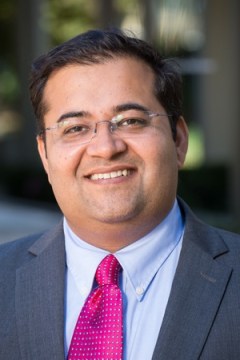
2016_Rich_Tran
Milpitas, CA Mayor Rich Tran

Q: On October 3 of last year, your council was considering a censure policy for council members. When Councilmember Bob Nuñez said that he had concerns about people following the rules–and singling you out specifically–how did you feel about that?

A: We never had a censure policy here in my city. Not in its 64 years. Councilman Nuñez wanted to bring one about so that in the event that I screwed up or something, he can censure me. Everybody has concerns about me, Michael. They call me the “outspoken mayor.”

Q: What does that mean?

A: Because I talk about things. I don’t accept things that shouldn’t be accepted. Councilman Nuñez was concerned that I was communicating with the community too much. The funny thing is, no one’s ever been censured. It’s like he’s waiting for me to slip somehow.

Q: It’s interesting because they did have the opportunity to, but they instead chose to send you a letter of disapproval chastising you for your conduct outside of the meetings–and that was all four council members. You said, “that goes to show Milpitas has the dirtiest petty politics in all of Santa Clara County.” What, from your point of view, is the root of the problem?

A: It’s an election year. I’m an independent leader. It’s definitely sad. You read the rebuke that was sent my way–the residents are pissed off that the city council’s playing these silly games.

Q: I get that they may not like you because of who you are. Can you think of some mistake you made as mayor that you would be willing to say is a mistake?

A: Definitely. I don’t have a great background in politics. It was only four years ago that I moved back to my hometown from Manhattan. I was going to NYU for my master’s degree. I had no job, no car, I was living out of the back of my uncle’s house–

Q: Sorry, are these all the mistakes?

A: No, I’m just telling you the lead-up. Getting into politics, I didn’t really know much. You asked me what my mistake was: I think to be misunderstood.


Follow Mayor Rich Tran on Twitter: @mayor_richtran
Interview #105: Fremont, CA Councilmember Raj Salwan (with podcast)

This podcast interview is available on iTunesStitcherPlayer FM, and right here:

Raj Salwan has attempted to establish some order in Fremont’s sometimes-fluid appointment procedures for council members. He talked about how things could be better, and also about one contentious development that led to a raucous council meeting.

Q: You were appointed to the Fremont council in 2013. There are also three other current council members who went through this appointment process–meaning that four out of the five of you at one point sat for an interview to be on council. Is that a coincidence or is this truly a shortcut to winning elections that people ought to know about?

A: There’s two types of candidates that apply for these appointments. One is the planning commissioners. The other are people who just ran in the last election. One of the things in Fremont is that if you came in third place in an election, you usually don’t get the appointment. The critics will often say that because you weren’t elected, the voters didn’t choose you. So it’s not really fair but that’s just how it has been.

Q: In 2017, there was another vacancy. And the odd thing to me is that you spent the first ten minutes not sure how things would go. Why did you not have the rules solidified?

A: A lot of times the process is whatever the mayor wants to make it. In the past appointments, some of the council members had said, “hey, I was confused about the process.” We were trying to find what the expectation was so we knew exactly what was gonna happen.

Q: Correct me if I’m wrong, but your new mayor at the time, Lily Mei, had never participated in this appointment process as either a candidate or as someone interviewing candidates.

A: That’s true. It was a new job for her and the first thing she had to do was try to replace her own position [as a council member]. So it got very–well, it was a difficult process.

Q: Ah. If I may point out another area of improvement: the questions you asked of these candidates, if I’m being honest, were pretty basic. “Tell us about yourself.” “How did you get involved in politics?” I think you need to kick it up a notch. Ask them questions like, “if this room caught on fire and you could only save two council members, who would they be?”

A: That’s definitely very critical thinking! In the past, some people had accused council members of asking pointed questions or questions that they felt made them look bad. This was the process the city clerk came up with to give softball questions so nobody could say, “I got this question because somebody didn’t like me.” But I hear you. I like tough, pointed questions.

Portrait-13_LoRes
Fremont, CA Councilmember Raj Salwan

Q: After your appointment in 2013, you did not win your election in 2014. But you did win in 2016. However, after the election but before your swearing in, the council voted on something called the Walnut Residences. In this case, the development was a huge lightning rod. Is that your memory?

A: This is the biggest fight in the Bay Area. Everybody complains about the cost of housing, but they always oppose housing when it’s near them. This became the flash point for this last election.

Q: In this meeting, Councilmember Lily Mei–who just defeated the incumbent mayor–said they should postpone the vote until you joined the council. I think she expected the vote to be different with you there. Do you think they should have waited?

A: No, I have to respect the decision of the council at the time. I wasn’t there and it’s not fair for me to comment or criticize.

Q: Did you see this at all as an attempt to speed things up like we’ve seen on the federal level–to take advantage of the partisan situation? Or do you buy the explanation that it’s been in front of the council for a really long time and it’s just time to get it done?

A: It’s a complicated thing. It’s been upcoming for several years. The applicant just wanted to get a decision. The council just wanted to take it on. It’s a great election issue for candidates who want to stop all growth. They point to [this].


Follow Councilmember Raj Salwan on Twitter: @RajSalwan

Interview #104: Prairie Village, KS Council Member Tucker Poling (with podcast)

This podcast interview is available on iTunesStitcherPlayer FM, and right here:

A whirlwind of activity has buffeted the Prairie Village council–starting with the onset of live streaming earlier this year and ending in an aborted council meeting earlier this week. Council Member Tucker Poling describes his at-times-incredulous reaction to some of the developments.

Q: I am talking to you in the third week of September, which means you had a council meeting a few days ago. How did that go?

A: It went about as well as council meetings go when nobody shows up!

Q: What?!

A: I had a nondiscrimination ordinance on the agenda and suddenly, the few hours before the meeting, we had four council members text or email the city manager and say that they couldn’t make it. Therefore, we did not have a quorum and we could not meet and hilarity did not ensue. I was not happy about it.

Q: You know Prairie Village and you know these council members. I don’t want it to sound like I’m blaming you when I say: should you have known this was coming?

A: I will say no. In my knowledge, it’s never happened before in this way. It’s been very rare we have more than one absence. At the time, I–let’s say I “lost my chill” a little bit, as the younger people say. I had no chill on that evening! [laughs]

Q: [laughs] Well that sounds perfectly “dope” and thank you for not being “extra” despite your lack of “chill.” And–I’m sorry, there’s something else that’s bugging me. Can you explain what was before you council on August 20 of this year?

A: That was Councilman Ron Nelson’s proposal for us to adopt the principles of the convention to end all discrimination against women. All Ron was asking for was a resolution saying that we support equity and equality for women and girls.

ShowImage
Prairie Village, KS Council Member Tucker Poling

Q: On August 20, the first thing that happened was that council members argued against the resolution. How did you feel about what you heard?

A: I felt mind-numbingly confused and disappointed. I was flabbergasted that this was controversial. We had people in an open, public meeting talking about conspiracy theories about the UN [United Nations].

Q: The resolution was not passed and sent back to staff on a vote of 7-5. Of the six council members who canceled at this week’s meeting for your anti-LGBT discrimination proposal, how many of them also voted to shoot down the anti-gender discrimination proposal?

A: All of them.

Q: Some of them were suspicious of the UN, and I guess I get that a little. It does feed into the caricature of middle America. But others were arguing that “all lives matter,” right? That, “why can’t we have a nondiscrimination again men too?” And others seemed to think there was no inequity in Prairie Village. I’m curious, if your council meeting had happened on Monday, would you have expected that same argument to come up about sexual orientation?

A: Yeah, there definitely would have been those same objections. “We don’t have any discrimination in Prairie Village. This is all ‘political.'” Which is just very confusing to me because the idea that the human condition does not apply in Prairie Village and all the flaws that we have as human beings somehow don’t apply in nice, upper class communities like ours–that’s pretty blind in my view.

Q: It occurred to me that people who said, “if we pass this, it’s just an admission that something is wrong here”–ironically, by not passing it, it gathered all this attention and people asking, “what is wrong with the Prairie Village council that they can’t pass this?” It had the opposite effect.

A: That’s exactly right. It’s bizarre that people think that by not acknowledging something, that’s just going to go away. And people are not going to notice that you’ve chosen to not acknowledge that equity issues exist everywhere.


Follow Council Member Tucker Poling on Twitter: @TuckerForPV

#168: Northville, MI 9/17/18

It was a historic day in the Northville council chamber–in the sense that history was the number one topic.

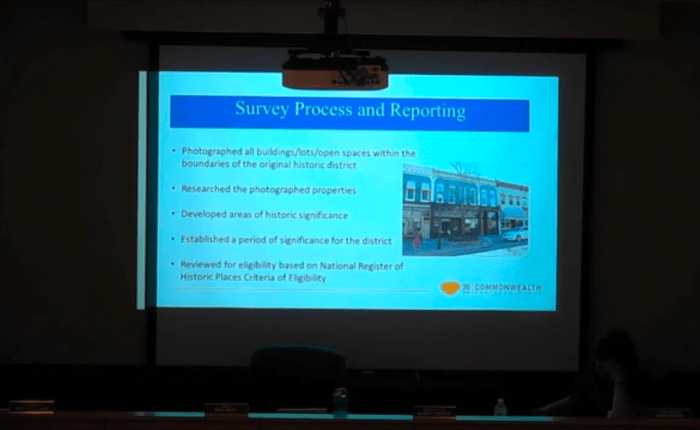
“It’s kind of prestigious to be on this,” prefaced a visiting architectural historian, flipping through a slide show about Northville’s spot on the National Register of Historic Places.

She flashed a boot-shaped map onscreen. “This is what the Historic District looks like when we started. The goal is to have the local and National Register districts match.”

Ah, who doesn’t love an audit! In this case, instead of sifting through hundreds of pages of documents, she sifted through hundreds of…buildings?

“We photographed all of the buildings, over 400. We developed historic significance–all of the things that make Northville Northville.”

Screen Shot 2018-09-20 at 9.28.16 AM.png
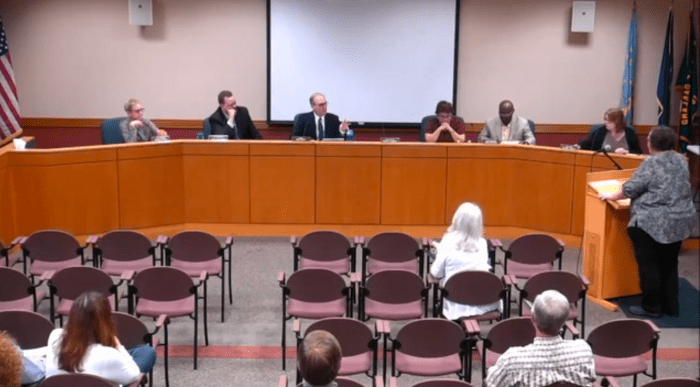
You’re gonna need a bigger list.

The historian cautioned that not all Northville memorabilia made the cut. “It has to be cultural,” she warned. “The hand of man has to be felt on it. That’s why rivers aren’t in a district, but a bridge would be.”

She gestured to a blank space in the center of the map. “This the ball field. It doesn’t have any history from over 50 years ago. It’s just a piece of ground, so that can’t be cultural.”

“What about the six mills that were there?” interrupted Mayor Pro Tem Nancy Darga.

“Are they there now?” the historian shot back.

“Their footings are,” retorted Darga.

“Well then,” the historian replied slowly, “that would be archeology. That’s not something that’s covered.

The mayor pro tem was horrified.

“Northville started on that ball diamond,” she insisted. “It’s because there was a mill there. We now just took the beginning of Northville out of the Historic District!”

Screen Shot 2018-09-20 at 9.29.07 AM.png
For shame!

The historian refused to back down. “Do you want to have archeology? I don’t think you can have archeology just for one plot. It’s gonna be the whole district.”

The consequence of that? “Anybody who wants to put in a new garden may have to consider” what lies below.

No one was eager to turn Northville into an excavation site for stegosaurus bones, so the baseball diamond issue was closed.

“Maybe I’m missing something here,” Darga said after a pause, “but we established a local Historic District in 1972. But now we’re trying to establish a NATIONAL–”

“You already have a national district,” interjected the historian. “We’re trying to make sure the boundary represents what’s here today. You don’t want to lose your district. And the Park Service will do that. They will de-list districts.”

This historic preservation business is ruthless. I imagine archeology is a cakewalk in comparison.

“I got a little lost,” Mayor Ken Roth admitted as the lights turned on and the projector turned off. “Our Historic District is listed…?”

“It’s both. It’s listed on the National Register of Historic Places and it’s a local Historic District,” the historian patiently reiterated.

“Okay.”

“The person who is the head of the National Register list is called the ‘keeper,'” she said.

“Seriously? The keeper?” Mayor Roth exclaimed. “That’s a real title?!”

“Yes! It’s much sought after,” she assured him.

Screen Shot 2018-09-20 at 9.31.45 AM.png
Where do I apply?

The council thanked the historian and switched to their regular business. The mayor requested a motion to approve the agenda. But suddenly, once he got it–

“All right, we will move on,” the mayor charged ahead before others on the dais stirred to halt him. He had forgotten to take a vote on the motion.

“I’m sorry. That was tricky,” he apologized, grinning. “We need the keeper!”

Podcast Recap: Second Anniversary Special

It’s an exciting week because we just wrapped up the second year of the City Council Chronicles podcast! In the past year, our episodes covered

3 countries 🌍

22 American states 🇺🇸

3 Canadian provinces 🇨🇦

And you can listen to the special anniversary episode on iTunesStitcherPlayer FM, and right here:

anniversary2-2
Year two guests

Other stats from this year include:

  • 52% of guests were men and 48% were women

  • 76% of guests were council members and 12% were mayors

  • One-fifth of guests came from California and Ontario

While you are exploring past podcast episodes, take note of our special programming:

“Tear It Down,” an eight-part story about one small-town government plagued by mistrust and poor decisions.

“Best Thing, Worst Thing,” a yearlong documentary series exploring cities and towns in North America.

“A Higher Expectation,” one person’s account of how city council meetings can be meaningful.

One more thing: please support City Council Chronicles and the podcast by learning more about our sponsor, Dig Deep Research. They assist local governments in obtaining grant money and are eager to hear from potential new clients. Find out how they can help you today:

DigDeepLogo-1

Month in Review: August 2018

If ever there was a time to start following City Council Chronicles, it was August. And I’ll give you one hint why:

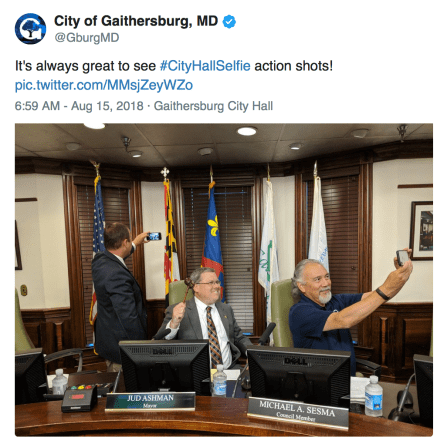
International #CityHallSelfie Day.

That’s right, we picked the top 10 city council selfies and showcased them to the world! But we had plenty of other serious news to cover, too. Have you heard of the mayor with a rat infestation?

Or the seven city council members who blocked an anti-discrimination measure?

That is some pretty serious fare. But you can also find more lighthearted segments with the council member who reenacted a medical drama and a role-playing exercise for teen engagement.

To engage yourself in a whirlwind of activity, check out the August Month in Review.

And if you aren’t a big reader, you’re in luck, because we’ve got images galore like this one:

Screen Shot 2018-09-02 at 9.50.58 AM.png

Interview #99: St. Petersburg, FL Council Member Darden Rice (with podcast)

This podcast interview is available on iTunesStitcherPlayer FM, and right here:

Darden Rice is the District Four council member in St. Pete and we spent time dissecting her city’s restrictive public comment period. Then we practiced convincing teenagers to come and speak to the council! (BONUS: Info about International #CityHallSelfie Day.)

Q: Council Member, I was angry when I heard that only city residents, owners of property, business owners in the city, or their employees could speak in your meetings–and only on city government issues. Does this mean I am not allowed to come and tell you folks why “Shrek 2” was better than the original “Shrek?”

A: Yeah, there might be some issues if you wanted to speak if you’re not a St. Pete resident. Although you could call your friends, like Council Member Darden Rice, and I could invite you to come talk about “Shrek.”

Q: I do know it’s highly unusual for a council to limit the kinds of people who can speak during a public comment. What would you say to the argument that, as a representative, you are obligated to hear what your people are concerned about? Even if that concern is not, strictly speaking, about city business?

A: I think you’ve got a really good point. I tend to be a little more liberal in the application of what rules we use. But at the end of the day, it is on advice from our legal team that the people that speak–because there’s limited time–that we honor those who are residents.

Q: Practically though, how do you screen out people who don’t meet those criteria?

A: There’s really a trust system involved. It’s so rarely that someone doesn’t meet the criteria.

Q: For the record then: if the Queen of England herself walked into the St. Pete council meeting for open forum and you had your suspicions that she was not a resident, you would still not say, “sorry, Mum, I’ll need to see the address on your driver’s license first?”

A: I would imagine that our chairperson of council would give the courtesy of the Queen to speak at council.

Darden_Rice-D4
St. Petersburg, FL Council Member Darden Rice

Q: Recently, Council Member Steve Kornell had an idea to ask the ministers you invite to do your invocations to also bring children from their youth groups to speak at council meetings. Can you explain what this procedure is supposed to look like? And please do use words like “dope” or “extra” in your answer.

A: [laughs] I think it has a good intention. I think it would take a lot of work bringing kids and getting them out of school to come and speak to council. I haven’t really thought about whether this is an idea I think is really great or if it’s just gonna make meetings run a lot longer.

Q: Let’s do a role-playing exercise. Let’s pretend you are a minister about to give the invocation–Presbyterian, if you need to get into character. And you are trying to convince me, a moody teenager, to come and speak during the open forum.

A: Hey, Michael. This is Pastor Darden Rice and we are gonna go up and talk to city council today. I’d like you to share some issues you have going on at school and talk about how safe you feel in the neighborhoods or not and just let your elected officials know about what it’s like living in St. Pete. How does that sound?

Q: Ugh, city council? That sounds like old people stuff. You are embarrassing me so hard right now in front of my phone. I will not be on camera without a filter. No way. #noway.

A: Hey, Michael, I think you ought to give this a second thought. When young people show up, we really listen. I think it would be a great learning experience.

Q: It’s not gonna be boring is it? My boyfriend went to an Ed Sheeran concert and said it was super boring and I’m worried this will be like the Ed Sheeran concert.

A: It won’t be boring because you’re just staying for the beginning of it. I promise.

A: Okay, fine. Only if I can text my friends about how I’m at the city council meeting and they’re not so they’re lame.


Follow Council Member Darden Rice on Twitter: @DardenRice

Month in Review: July 2018

July was a solid month for a couple of our key demographics. Readers, for instance, were buoyed by the news that the Book Mobile was roaring back after a 30-year absence!

People who enjoy theater and comedy were also pleased when we interviewed the city manager whose council loves to put on an elaborate production once a year.

We also heard on the podcast from two council members who were part of a once-hostile atmosphere at their city halls that has since cooled down considerably.

To find out who is a city council trendsetter and who is still working out the kinks of the job, check out the July Month in Review.

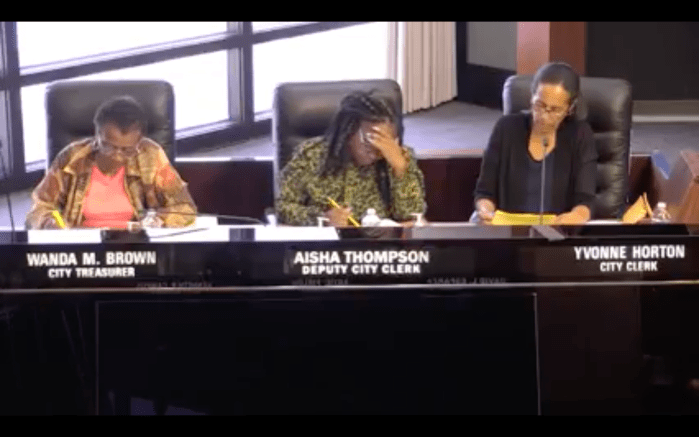
And if the thought of catching up on all of the council meetings you missed seems daunting, the deputy city clerk here feels your pain:

Screen Shot 2018-07-12 at 9.07.40 AM

Interview #97: London, ON Councilor Virginia Ridley (with podcast)

This podcast interview is available on iTunesStitcherPlayer FM, and right here:

How much time should city councils put between heated debates? First-term Councilor Virginia Ridley has some suggestions. Plus, on the podcast we discuss bullying, meeting schedules, and affairs.

Q: I want to go to October 27, 2015. Not to get too specific with the listeners, but there was a report from the city administration about arts funding that the council asked for earlier that year. And Councilors Jesse Helmer and Mohamed Salih did not feel city staff had given you what you requested. So they made a motion to refer the report back to the administration. How often does council vote on something in a meeting and then people don’t follow it?

A: At the beginning of our term, I think it happened more frequently than it should. We had a relatively new council. We had a number of bumps in the road and maybe council’s direction was misunderstood.

Q: So after a bit of debate here, you stood up and offered a motion to reconsider. The council voted on the Helmer-Salih motion, which was defeated, so they moved on to your reconsideration motion. However, the mayor suddenly told you that you were ineligible to make that motion because you were absent from the original meeting. How were you feeling at that moment?

A: Oh, I was angry. We had already established that if we vote no to the motion on the floor, we could do reconsideration right next. You see there was no pause. Within three seconds, it’s, “oh, no, you actually can’t make that motion.” It certainly angered me quite a bit.

Q: Right, one vote can certainly affect a subsequent vote in council. And it did seem a bit suspect that the mayor did not have this information on the screen before he, I guess, clicked “end” on the voting and announced the result. But I’m sure he did the best he could…except for the fact that you learned MINUTES AFTER that vote that you ACTUALLY WERE in attendance and could make the motion! Did you have a realization of, “oh, god. If that was incorrect, what else in our records is inaccurate?”

A: I knew all along I was correct. It was one of those, in the moment, not having the proof at my fingertips. I would agree with you. What other errors could potentially happen here?

1297672163982_ORIGINAL.jpg
London, ON Councilor Virginia Ridley

Q: At this point, the city manager stands up. He responds to the initial complaint that this report is not what the council ordered by stridently defending the staff. How justified was his pushback?

A: I don’t know if I could say that absolutely he was in the right. That statement probably escalated things more than they needed to. The way our council works is the night before, we would’ve had a committee meeting. That would’ve been Monday night. On Tuesday night, council would confirm and re-debate all of the committees that had happened. We were having the same debates the second time.

Q: I mean, doesn’t that open itself up to the situation we just witnessed? That if you didn’t win the argument on your first night, you get to re-litigate the argument on the second night?

A: The fact that we do it one day apart, people haven’t had the opportunity to reflect. If we’re there until midnight on Monday and we’re back 16 hours later, people haven’t had time to walk away from the situation, think about it, talk to their constituents.


Follow Councilor Virginia Ridley on Twitter: @virginia_ridley