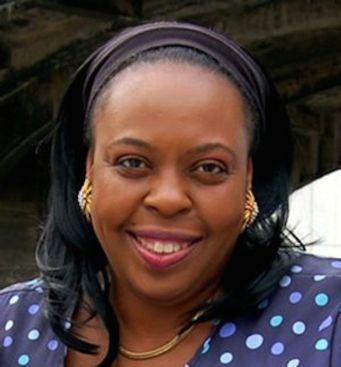
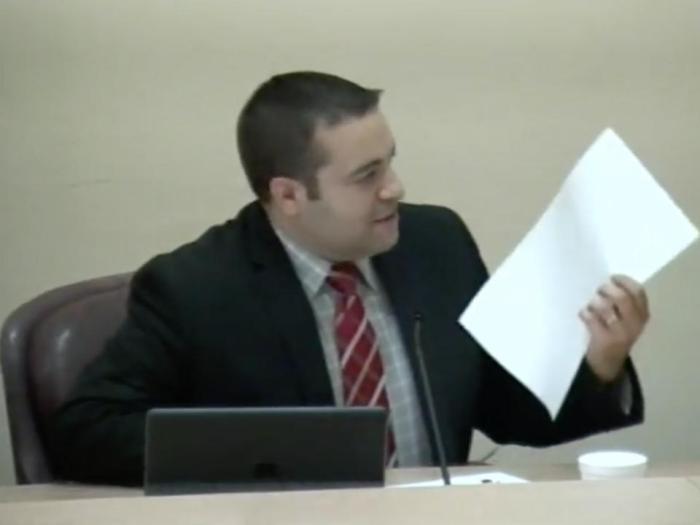
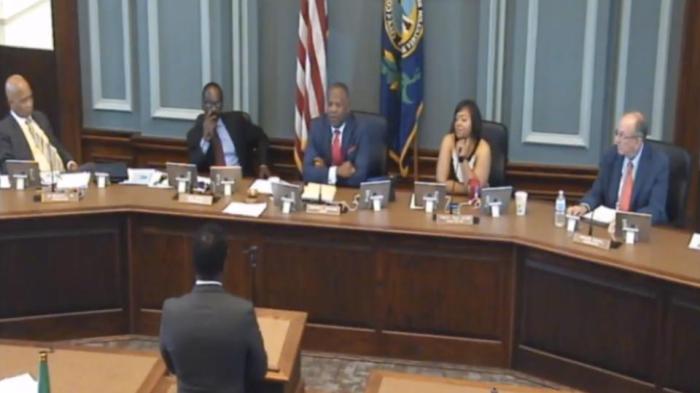
Interview #96: Charlotte, MI Councilman Branden Dyer (with podcast)

This podcast interview is available on iTunesStitcherPlayer FM, and right here:

Branden Dyer spent 2011-2015 on the Charlotte (rhymes with “car lot”) city council, was defeated for reelection, but was appointed back on the council this March. The difference in tone between 2015 and 2018 is night and day.

Q: In your final meeting during 2015, you said you felt that the “negative campaign” against you was a distraction. Your city is only 9,000 people; don’t take this the wrong way, but what was there to be negative about in Charlotte?

A: A group of individuals who were not happy with the situation made an effort to remove me and other individuals from council. You kind of expect it in national elections, but there was a lot of rumors, a lot of negative Facebook comments and attacks.

Q: Some meetings, commenters seemed to imply the council was a rubber stamp for the city manager. Was that part of the tonal shift in Charlotte politics?

A: Yes. Their intention was to get rid of the city manger. When they made a move to not renew the city manager’s contract, there was a significant community uproar and they eventually backed down.

Q: Did you ever feel any pressure on council to go out of your way to question or oppose the city manager’s recommendations because you had this accusation of a rubber stamp being hurled at you?

A: No, I had no qualms with disagreeing with the city manager. But also, the city manager has a PhD literally in city management and I do not! In this age of complex government regulations and techniques, I think it’s best to defer to the expertise.

21751573_1416223605165826_181747683923107386_n
Charlotte, MI Councilman Branden Dyer

Q: Well, I have a PhD in making quality municipal affairs audio content (obviously from the University of Phoenix), but it is 100 percent impossible to look at any of your council meetings from 2015 without noticing a young man named Zachary who was a candidate for mayor and an unrelenting critic of your government. What was his deal?

A: [He] was a disgruntled citizen that definitely exercised his five minute public comment limit down to the second at every chance he got. I tried to get him involved on a city committee but he never responded to my offer. After losing the mayor race, apparently his concerns were satisfied or he just kind of disappeared.

Q: He was pretty much in there nonstop to troll you guys and, I’m assuming, get free video of his speeches for his campaign. How did you respond to being baited?

A: Zach never really came after me personally. [The mayor] did not choose to run for reelection. Her term as mayor was difficult on her. Zach routinely attacked her and the city manager personally. The environment and vibe on council was a lot different than when I first went on council and my current term on council. “Toxic” is not really the word I want to use, but I think that’s kind of the best way to describe it.

Q: Was part of the reason you wanted these meetings videotaped and put online so that people who were not the attackers could look at what you were encountering and kind of sympathize with the situation?

A: I don’t think I was necessarily looking for sympathy, but you want everybody to be informed. The group that came against me and other council members were very savvy at using social media. They could get their view out there, and I wanted to be sure there was an official record so that if individuals chose to, they had the ability to see what actually happened instead of taking one viewpoint from one group in town. I wanted to make sure things weren’t skewed.
Interview #95: Hillsboro, OR City Manager Michael Brown (with podcast)

This podcast interview is available on iTunesStitcherPlayer FM, and right here:

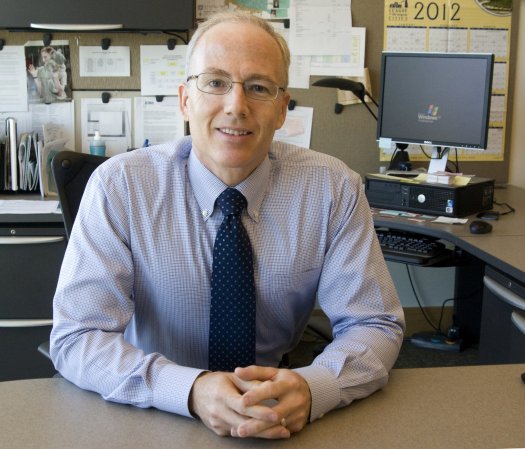
The thing you need to know about Hillsboro is: they have fun. Whether it’s art in the council meetings or elaborate comedy routines at the state of the city, creativity abounds in the Hillsboro council chamber. City manager Michael Brown elaborates on why that is.

Q: I am impressed by the range of creative expression that gets showcased in Hillsboro. Just in the past six months, you had artists, you had high school performers, and–my favorite–you had second and third graders dressed up as historical figures from Hillsboro. Is there any segment of society or culture that you would like to be featured in your council meetings?

A: Anything. We view our council meetings as basically a community gathering where half of it is creating performances and different ways to connect with the community. And the second half’s a business meeting. The ones that stand out to me are musicals. Those are really, really fun.

Q: Do those ever make you wish you were on the opposite side of the dais entertaining the audience?

A: No, not anymore. I tried to do acting when I was in high school and the acting director pulled me aside and said, “you know, I think you’d be better as a stagehand.” I worked in the back of the stage, not the front.

Q: Is that a good philosophy for a city manager? Be the stagehand, not the leading lady?

A: [laughs] There’s different expectations council has for you, whether you’re out in front or behind. I like being in the background with charismatic, smart, intelligent leaders out in front of me.

Q: Something completely unexpected to me was watching your state of the city address. Normally across cities, these things are pretty uneventful. The mayor gets up there; rattles off statistics about how well the city is doing; people applaud; and an hour later it’s done. But in Hillsboro, the state of the city is not just a speech. It’s a production. In the 2017 state of the city, for instance, Mayor Steve Callaway had the audience do a text message poll. How does the state of the city come together?

michaelbrown2jpg-fbc185b8da57067d.jpg
Hillsboro, Oregon city manager Michael Brown

A: Over the course of maybe six months in advance of the performance, we have a group of people that are laying it out and planning it. We sit around, talk about what things might be interesting. In the case of the last mayor and Mayor Steve Callaway, they’re really funny. They really enjoy the opportunity to engage the audience and not get up and give a big speech and have everybody clap. They recognize the value of humor and wit. It is a performance. We view it as a performance.

Q: Your mayor is probably one of the best deliverers of this highly specific kind of entertainment. And speaking of deliver, this year’s state of the city featured former Mayor Jerry Willey walking in as a pizza delivery guy. Did any of the other cities you worked for come close to this kind of choreography?

A: This is a unique place! They enjoy poking fun at each other in a positive way and if you knew Jerry Willey, having him in a pizza uniform is the last thing you think he would do.

Q: One thing that’s not exactly entertaining, but it’s certainly unorthodox for any state of the city address, is that Mayor Callaway actually gives up the microphone midway through and lets councilors have their own time to speak. Why would the mayor give up precious camera time to the hoi polloi on the council?

A: Because it’s a council and the mayor is part of the council. While he’s the political head of government–the person people look to–he wanted to create the space for them to be up there and have the group be together and say, “we view it as a team.” He cares a lot about that.

Month in Review: May-June 2018

We came back from our hiatus (because of Tear It Down) last month and not a moment too soon! If we hadn’t, we might have missed, for instance, the poor cockroaches that got dumped onto the dais.

Or the mayor who had secret side gossip with council members during a meeting.

And on the podcast, we encountered one councilor who wanted his own coverage erased–a request to which we flatly said “no.” But on the brighter side, another council member offered to have a sleepover in his council chamber–to which we flatly said “YASS!”

To relive the moments that are only memorialized in time on these very cyberpages, surf the May-June Month in Review.

And if you doubt that last month’s council meetings were heated after all, feast your eyes upon the body language right here:

scr3

Interview #94: McDonough, GA Councilwoman Sandra Vincent (with podcast)

This podcast interview is available on iTunesStitcherPlayer FM, and right here:

Sandra Vincent has been on the McDonough city council for over a decade and only recently experienced her first meeting about tattoos and piercings. We also covered her frustration over a park and what that meant for a business owner who wanted to comment upon it.

Q: Last year, there was one part of the city employee handbook that bothered you–the council was trying to limit tattoos and piercings. Was this the first time in your more than a decade on the city council that this subject came up?

A: There have been other times we discussed dress code. I don’t recall there being another time when we specifically were creating policy that descriptive around tattoos. Tattoos, even though I don’t have a tattoo and don’t particularly like them, culturally there are more young people who are into tattoo wearing. To say that we’re not going to hire individuals with tattoos above the neck is to limit ourselves.

Q: How surprised were you that the others did not see it your way?

A: I was extremely. I think I had a weeklong debate with my four daughters. What was even more odd is that there were people presenting in the audience that evening who represented the local chamber [of commerce], one of which had tattoos and a mouth piercing!

Q: No way!

A: I was sitting there thinking, this is a professional woman that has just presented this amazing piece to us. She has tattoos and piercings and we’re saying that if you exemplify those characteristics, that’s not considered professional. I almost felt like I had been propelled back about 20 years.

56992c9f518ef.image
McDonough, GA Councilwoman Sandra Vincent

Q: At the meeting on April 18, 2016, you moved to add a discussion of the Overlook subdivision park to the agenda. But other council members said they had already told people that there would be no discussion and therefore it should stay off the agenda. How sympathetic were you to that reasoning?

A: I wasn’t. Initially, the Overlook discussion was on the agenda. In that chamber were somewhere between 50 and 75 individuals from the Overlook community who had come out. Somebody took it off [the agenda].

Q: After you gave a presentation despite the mayor trying to gavel you down, the audience applauded and you left the chamber. Do you remember where you went?

A: I walked outside of chambers through the back door to try and capture myself. I went out and did have a conversation because those are people that I represent. I think the most heartbreaking thing was an elderly gentlemen–he just kind of looked at me and said, “Ms. Vincent, what do we do now?”

Q: When you came back in the room, you and a public commenter had an exchange in which you wanted her to state that she did not live in the city, despite owning a business there. Did you have a history with that person?

A: The commenter had concerns regarding the park. My response concerning whether or not the individual lived in McDonough was germane to the fact that there were almost 75 individuals who live in the city that were refused an opportunity to speak. We’re talking about specific issues for a particular geographic area and this business is across town. I don’t see how it’s fair to not disclose the fact that the person is not a resident.


Follow Councilwoman Sandra Vincent on Twitter: @sandravincent

#159: Scranton, PA 6/11/18

Sometimes it feels like everyone’s a critic. But in the Scranton council chamber, literally everyone who showed up had some beef with the five councilmen.

“I actually have to grab the speaker list,” Council President Pat Rogan admitted with a sly grin, excusing himself from the dais while a dozen pairs of eyes followed him out of the room.

Sitting down with the paper, he brandished it with feigned surprise. “So there’s nobody on the speaker list–” Rogan deadpanned before calling up the first in a series of aggrieved complainants.

scr1-2
Is that Dunder Mifflin paper?

“Comcast, okay? They are a monopoly. In the United States of America, a monopoly is illegal,” ranted a man in a black “Brooklyn” baseball cap and thick New York accent.

“They don’t want to give a senior citizen’s discount! I come from New York City, okay? Five boroughs–not anywhere in the five boroughs will you find that they will not recognize what senior citizens have done for this country,” he pounded on the lectern. “I have five major credit cards! I have seven different department stores!”

He waved his arms. “How can any one of youse here allow this to happen?”

“We don’t set the rates for Comcast,” President Rogan responded plainly. “Comcast is a private corporation.”

scr2
“So, no discount?”

The commenter was replaced by another middle aged man with a pair of reading glasses on his nose and sunglasses on his forehead. He emitted a deafening sigh into the microphone.

“I don’t even have a computer and I apparently know more about what’s going on in the city than you five, the mayor’s two hacks, and the mayor.”

Okay, let me stop you there. In the interest of time, let me annotate this testosterone-fueled grudge-fest to just the most cantankerous of grief mongering. The three wordsmiths here are:

-A strident elderly man in a yellow Polo (Y)

-An affable college student with half a mohawk (M)

-A woman with pinkish curly hair (C)

Ready? And go:

Y: You’re an elected official and the forum here is for the issue of debate. And if you can’t answer, then I ask you to resign.

M: The reason that people my age leave this area is because we don’t have faith in you guys.

C: Mr. Donahue, when speakers are up here, you have your head down and you are writing what they are saying? You could look on YouTube.

Y: You are a liar and should have resigned and maybe there’s litigation that will remove you.

M: Two of you keep looking down–aren’t even looking at me.

C: When speakers are speaking, you should–okay, you’re shaking your head.

Y: When I brought up the word “despicable” last week, it was mild terminology for what’s going on here. I’d like to put it in real words, but I might burn this microphone.

C: I’m disappointed. I voted for you.

M: This city council has lacked the competence needed to bring Scranton back on the map like it used to be. (A siren goes by in the background, as if on cue.)

scr3
I’m sure the councilmen on the wall had a similar experience.

As yellow-Polo-shirt man walked away from the microphone bellowing for Council Member William Gaughan to “resign, you don’t belong here,” Mr. Brooklyn Hat began yelling from the gallery. That, in turn, prompted others to start yelling.

“You’re both out of order!” pleaded President Rogan.

“This is a sideshow,” murmured the next commenter at the mic.

It was. Although I sense it’s also a regular Monday night in Scranton.

Interview #91: Littleton, CO Council Member Kyle Schlachter (with podcast)

This podcast interview is available on iTunesStitcherPlayer FM, and right here:

With a new council and new snack bar, the tone of Littleton city council meetings has changed since Kyle Schlachter was sworn in last year. We talked about one major loss of power for the council members and the potential for a council chamber sleepover.

Q: Littleton is a bit unique in that I have actually been inside your council chamber in real life. Granted, it was before you were elected, so is the chocolate fountain next to the Skee-Ball machine still there?

A: It’s still there, yeah. We just hang out there all night. Actually, your appearance at Littleton city council was my introduction to City Council Chronicles.

Q: When I was giving public comment–which was promoting International City Hall Selfie Day–the clock underneath the mayor was alternately counting up time and counting down time. That was a bit distracting.

A: I think that was done on purpose. We had a professional in there, so we try to throw them off your game.

Q: I pinpointed the low moment from your council meetings when, on January 16, council repealed an ordinance that would’ve allowed you to be police officers for no pay. Before they made you turn in your badge and your gun, how close were you to solving all those cold case homicides?

A: We were very close, but unfortunately we had to pull the rug out from under ourselves. Actually, my wife sent me an email from the charter with that little mention of city council members being police officers. I followed up with the city attorney and he said, “yeah, that’s in there. We should probably get rid of that.” It was a little disappointing that I am no longer a “police officer.”

Schlachter
Littleton, CO Council Member Kyle Schlachter

Q: Is there any rule in the charter as it pertains to the council meetings that you’ve now experienced that you would like to change or get rid of?

A: Not that I can think of. I do like the one change that I noticed: Mayor [Debbie] Brinkman added refreshments to the meetings. In previous councils, there were no refreshments. I find that very nice not only for us council members, but for the audience. I like to see people out there eating their cookies, spilling crumbs on the floor and everything.

Q: Is the food and drink for everyone, or is it to keep the council’s blood sugar up as you go into the second or third hour of a meeting?

A: It’s for everyone. There’s cookies and brownies and drinks for everyone to have. Gotta keep them happy so they don’t come over and attack us even more viciously than has happened.

Q: One of your regular commenters brought up the fact that Littleton used to allow 10-minute presentations by residents in the past. Why do you as a council not want a longer public comment?

A: It sounds like she would prefer a 20 or 30 minute comment, so I could pick up and move my family and go live in the council chambers and just have people come 24/7 and speak to me. That might be a better approach.

Q: You know, after the food and drink, a sleepover seems like the next logical step. I don’t think you’re making this less appealing to the citizens of Littleton, Kyle!

A: [laughs] There’s plenty of opportunities for the citizens to get in touch with council. Three minutes is plenty of time. Most people don’t use their full three minutes. I don’t think more time does anything.


Follow Council Member Kyle Schlachter on Twitter: @Kyle4Littleton

#158: Columbia, SC 6/5/18

“It’s amazing. You referenced the prophet Isaiah–‘come let us reason together’,” Mayor Steven Benjamin mused after a pastor wrapped up his invocation and the audience lifted their heads.

“We’re gonna move to defer item 41 for two weeks in the interest of everyone talking together again. Let’s see if we can get some good discussion.”

Eying the standing room-only crowd–some wearing color-coordinated t-shirts–the mayor added, “we’re not gonna be voting on the healthcare plan tonight. Some of you obviously have other things that you need to be doing.”

A cacophony of disgruntled murmuring arose as a mob of people lined up for the door. Council members sat stiffly and Mayor Benjamin fingered the gavel just in case.

“Please keep it down just a tad bit!” he hollered.

col1
“See you in two weeks, everyone!”

The crowd may have left, but the fireworks were just getting started.

“Mr. Mayor, I am opposed to this because this is another start of tax breaks for student housing in the city of Columbia,” insisted Councilman Howard Duvall indignantly.

“I respectfully disagree,” Mayor Benjamin replied calmly. “We’re gonna be able to disagree on policy and respectfully disagree.”

For the third time in under a minute, he clarified, respectfully: “But I respect your ability to disagree.”

With that, the fury fizzled. Everyone got on the same page and with rocket speed approved one item after the other–only pausing long enough for Councilman Duvall to exclaim:

“Those were the most detailed plans I’ve ever seen for a bicycle repair rack! About 16 pages!”

All of a sudden, as the clerk prepared to call the roll, Mayor Benjamin stood up and wandered over to Duvall, deliberately switching off the councilman’s microphone and whispering in his ear.

“Mr. Duvall?” the clerk prompted.

With the two men gossiping off mic, Councilwoman Tameika Isaac Devine glanced over. “Howard, say ‘aye’,” she coached.

Duvall whipped around and blinked. “Aye!” he declared, spinning back to continue with the mayor.

Apparently, Mayor Benjamin is a master of keeping secrets. Not five minutes later, he again sprung up to have a side chat with Councilman Edward McDowell, all the while keeping far away from the microphones.

What was he plotting? A surprise party for someone’s birthday? A legislative coup? A strategic ploy to make the front page of City Council Chronicles?

Untitled presentation-4
Mission accomplished, chief.

Councilwoman Devine raised her hand. “I would just say, regarding mainly our land use boards, the new members will have to go through training.”

She fired a warning shot to the newest crop of board members. “They are sitting and representing the city. They need to hear people out. They need to be respectful. And they need to follow the law.”

I would add a final commandment: they need to avoid having side chatter in a business meeting. (Not directed to anyone in particular!)

Moving on to public comment, a man with a striped tie sternly informed council members, “I myself on May 27 was the victim of racial profiling. I wasn’t pleased.”

Then, in a possible attempt at intimidation, he cautioned: “I told your chief, once my people come from Seattle, we will be organizing protests.”

col1-2.jpg
Seattle knows how to protest, Your Honor.

It didn’t work on Mayor Benjamin. “They’re welcome to come from Seattle, my friend,” he nodded. “We have porous borders. If you are in the borders of the United States of America, you’re welcome to have your positions heard. Happy to talk with you.”

We know you are, Mayor. We know.

Interview #90: Norman, OK Councilmember Breea Clark (with podcast)

This podcast interview is available on iTunesStitcherPlayer FM, and right here:

Who would have thought that Oklahoma would be such an emotional hotbed for council meetings? In Norman, first-term council member Breea Clark has seen tensions run high over an obscure procedure, a street with an offensive name, and even a minor cultural proclamation.

Q: What is the Norman city council “rule of three?”

A: [sigh] Oh, the rule of three. It’s when three council members can choose an issue and force it on the agenda.

Q: Council members have some differing opinions on whether it is a good thing or, as someone else put it, a “bastardized” procedure.

A: I think you use the rule of three when you reach out to fellow council members and say, “hey, let’s talk about this” and they all tell you “no.” Having seen that process and the lack of communication when [other council members] used the rule, I personally will do everything in my power to never use that rule because it is so divisive.

Q: When I say the name “Edwin DeBarr,” what can you tell me about him?

A: I can tell you that he was one of the first four professors at the University of Oklahoma. He was a very knowledgeable man who spoke many languages. And I can then tell you that he went on to be a grand dragon of the Oklahoma KKK at the height of the brutality.

Q: People started showing up in your meetings and told council, “we have a street named after Edwin DeBarr and that is racist. Please change the street name.” The fact that it wasn’t happening immediately rubbed a lot of people the wrong way. At the October 24, 2017 meeting, the mood was tense. You’re sitting up there as a white woman with an all-white council–there was some shaming going on. How did you sense that the others felt when people were accusing you of being tone-deaf white people?

A: I don’t think any of my colleagues intended to be tone deaf, but it was uncomfortable. I think those comments hurt a lot of feelings, but they shouldn’t have.

Clark312x208
Norman, OK Councilmember Breea Clark

Q: Some of the commenters called you out in a complimentary way to thank you for being a leader on the name change. Did any other council members come up to you and say, “I didn’t appreciate being called racist. I wish you might have told people to tone it down.” Did anyone lay that at your feet?

A: They did not lay that at my feet directly. I don’t think it’s my position to be the tone police. But how that all went down has created some very tense relationships with some of my colleagues. It changed everything. I will always regret the outcome of that. How they got a little beat up on the dais–I am the face of blame for that. We do not have the same relationship that we had before.

Q: Does that bother you?

A: Of course it does.

Q: Before you were a council member, there was a meeting the night of September 28, 2010. The council was considering a proclamation for GLBT history month. Have you ever listened to that meeting before?

A: I will be honest and say no, because I know what happened. I have seen pieces of the ugliness of our community since then and I couldn’t bring myself to listen to it.

Q: A week after that meeting, a 19-year-old gay man who had been in the audience and heard some of the anti-GLBT comments killed himself. Do you feel that the council, by allowing hate speech, might bear some responsibility?

A: [pause] That is a slippery slope. I wasn’t there that night. I’m glad I wasn’t there that night. But I wish somebody would’ve spoken up.


Follow Councilmember Breea Clark on Twitter: @clarkfornorman

#157: Brooklyn, OH 5/29/18

“A council meeting in Brooklyn?” you’re thinking. “Surely it was chock full of complaints about hipsters, the L train, and the smell off the East River.”

Well, I have some bad news for you: this is Brooklyn, Ohio. And the topic today was less about subway delays and more about the equally compelling question of how to spend all this federal money.

“To qualify for this grant funding, cities are required to hold a public session,” boomed President Ron Van Kirk.

“At this time, I would ask members of the audience to come up to the podium if they wish to make a suggestion on ways this funding should be allocated.”

Van Kirk warned the ravenous crowd that they ought to get to the point, and get to it quickly. “Please limit your remarks to five minutes or fewer.”

Not a soul stirred at his invitation.

“All right,” the president murmured, “then there is no one.”

No one has an idea for spending the money?! Repaint the fields at Marquardt Park! Put a streetcar on Biddulph Avenue! Get a better sound system for the council meetings!

Untitled presentation-2
Maybe fix up that tattered George Washington portrait?

This being the first meeting after Memorial Day, the council was obliged to mention the solemn occasion. The perfect spokesperson appeared in the form of Council Member Mary Balbier–the wife of a Vietnam veteran.

“I’m not very fond of the hat he wears–the baseball hat that has the 25th Division and some sort of lightning rod on it,” she admitted with a wave of her hand.

“But I will tell you: everytime we walk through an airport and he’s wearing that, people salute him. People make a comment. And it’s quite heartwarming for him and I think he enjoys it. So I don’t say too much.”

With a slight grin, she let slip her true feelings about her husband’s headgear. “Also, he is TSA approved, so we just walk up and go through the line. I always say to my husband, ‘whatever happens, keep that hat. I may need to wear it!'”

Untitled presentation
The master strategist

President Van Kirk steered back to council business with an admission of his own. “I wanna let residents know that I will be absent for our next meeting,” he said regretfully.

“Our first meeting in June falls on the same week that our church has their annual youth camp. Seventeen years, and I’ll be serving there once again as a camp counselor.”

(If he runs his youth camp as efficiently as he runs the council meetings, those kids won’t even need the full week–they’ll be outta there in a matter of days!)

The remainder of the meeting was virtually on autopilot, as the building commissioner rattled off the changes–big, small, and alcoholic–happening around town:

“Aldi’s is getting an addition put on there….Hampton Inn, raising the roof on their building….La Casa Tequila just recently opened up behind Cracker Barrel.”

Untitled presentation-3
Casa Tequila AND Cracker Barrel? Maybe the U.S. and Mexico CAN work things out.

Racing through the final five minutes, the council approved a raft of legislation assembly line-style. This included one agreement for the city to order a whole bunch of salt.

“We could order no more than 3,920 tons.” President Van Kirk paused. “The city has never ordered that much salt in one year.”

Be careful, sir: now that La Casa Tequila is in town, the demand for salted margarita glasses has never been higher.